
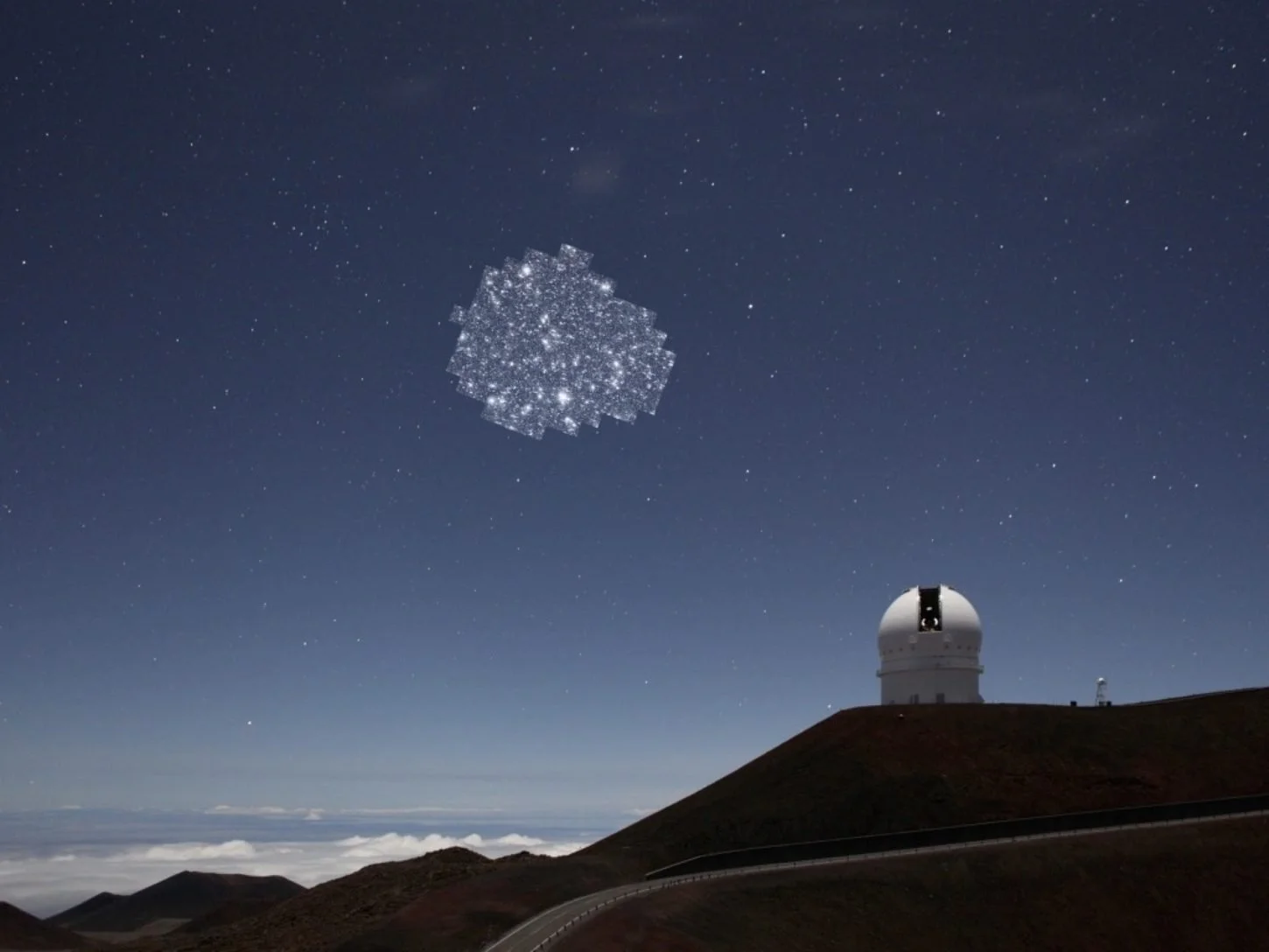
CFHT on Maunakea with the NGVS footprint overlaid on the night sky. Image courtesy of NGVS Team, CFHT, Jean-Charles Cuillandre.
From the summit of Maunakea, a place of deep cultural significance to Kānaka Maoli, the Indigenous people of Hawaiʻi, astronomers using the Canada-France-Hawaiʻi Telescope (CFHT) have completed the most comprehensive survey ever conducted of the Virgo Cluster. Spanning more than a decade of observations, the survey revealed more than 2,100 previously unknown galaxies and more than doubled the known galaxy population of the Virgo Cluster, our nearest galactic neighbor.
CFHT on Maunakea with the NGVS footprint overlaid on the night sky. Image courtesy of NGVS Team, CFHT, Jean-Charles Cuillandre.
The achievement marks the completion of the Next Generation Virgo Cluster Survey (NGVS), an ambitious international collaboration that used CFHT’s MegaCam instrument to map the Virgo Cluster. With unprecedented depth and detail, the NGVS provides the most complete picture of this important region of the Universe and is one of the most ambitious imaging surveys ever undertaken with the Canada-France-Hawaiʻi Telescope. The research has been published in the Astrophysical Journal Supplement Series.
Virgo Cluster: Home to Hikianalia
Located approximately 50 million light-years from Earth, the Virgo Cluster is the nearest large galaxy cluster to the Milky Way. Because of its relative proximity, it provides astronomers with a unique opportunity to study thousands of galaxies in remarkable detail, making it one of the universe’s most important laboratories for understanding how galaxies form, evolve, and interact.
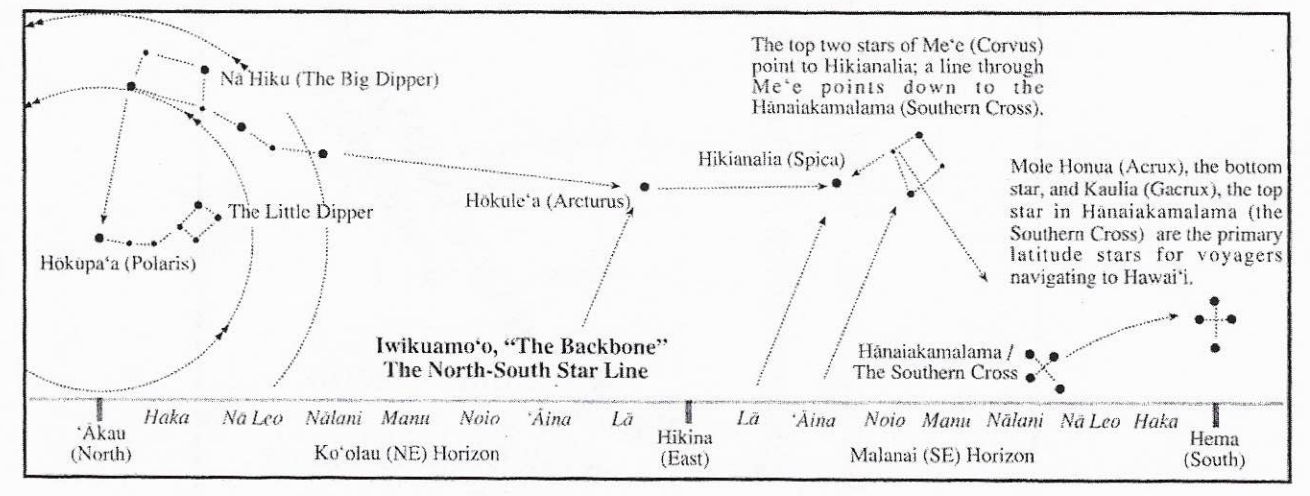
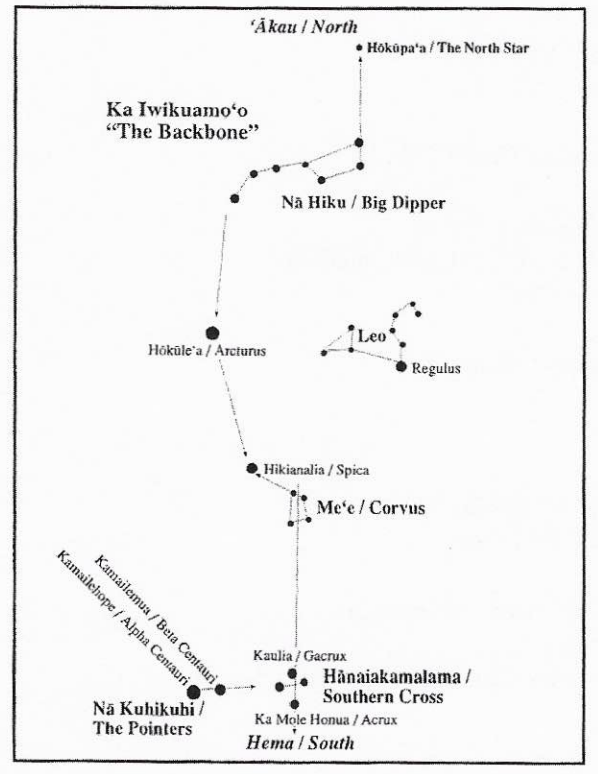
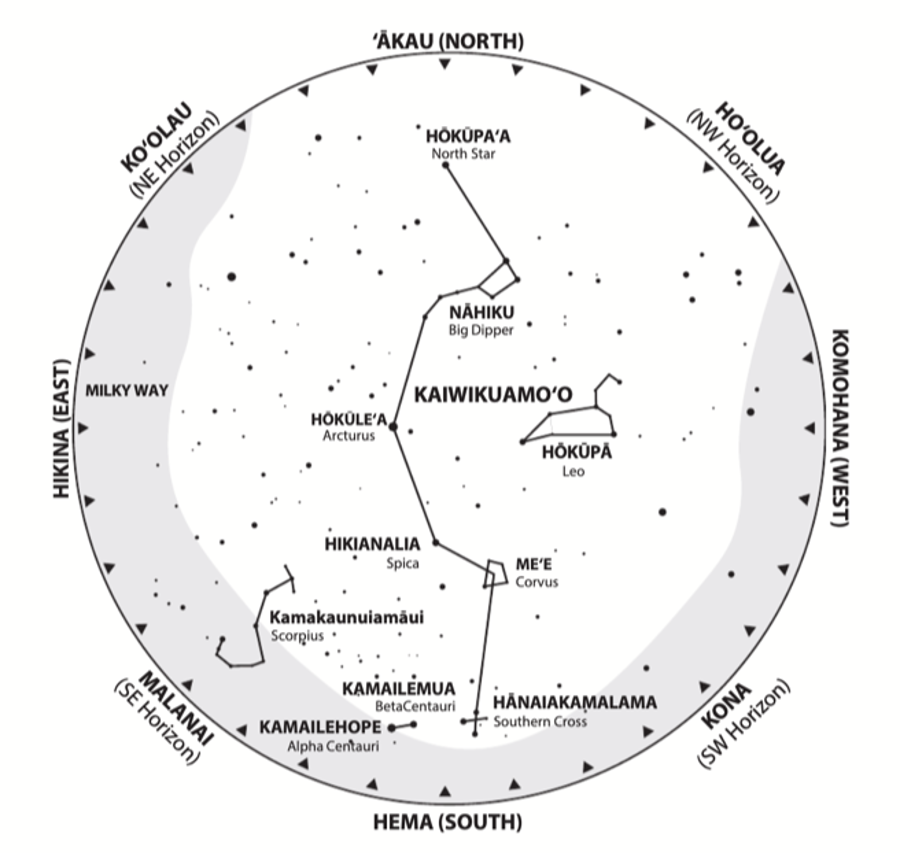
The Virgo cluster also holds significance for Hawaiian and Polynesian navigation, as it is home to Hikianalia (Spica). Hikianalia is one of the stars that traces Iwikuamoʻo/Kaiwikuamoʻo (the backbone) — the celestial north-south line where stars appear like vertebrae along a backbone, guiding navigators as they determine their latitude on the open ocean. The name also signifies a genealogical line, with each vertebra representing a generation.
Hikianalia is the sister star of Hōkūleʻa (Arcturus), as they break the horizon together at the Hawaiian islands’ latitude. This star is also the name of a contemporary waʻa (voyaging canoe) that has sailed across the world with its sister waʻa, Hōkūleʻa. “We navigated Moananuiākea (the Pacific) using the stars, so navigating Laniākea (our galactic supercluster) feels like a natural extension of that tradition and of wayfinding knowledge,” said Alexis Acohido, a remote observer for the Canada-France-Hawaiʻi Telescope. Across centuries and cultures, Hikianalia has served as an important point of reference. Different traditions share the spirit of studying the stars and recognizing the immense knowledge encoded in the cosmos, as people navigate both the Pacific Ocean and, today, the universe.
Taking a Deeper Look at Virgo
Despite the proximity of our giant next-door neighbor, it has been more than forty years since the last comprehensive study of the Virgo Cluster. For more than four decades, astronomers relied on the Virgo Cluster Catalog, compiled in the 1980s using photographic plates. While groundbreaking for its time, advances in digital imaging, computing, and astronomical instrumentation made it possible to revisit the cluster with far greater sensitivity than ever before. The Next Generation Virgo Cluster Survey was designed to take advantage of those advances, providing the deepest and most comprehensive view of the Virgo Cluster ever obtained. "Recognizing that a new survey was clearly in order, over 10 years ago our team set out to correct this blank spot on our cosmic map," explained Dr. Laura Ferrarese, NGVS co-lead and principal research officer.
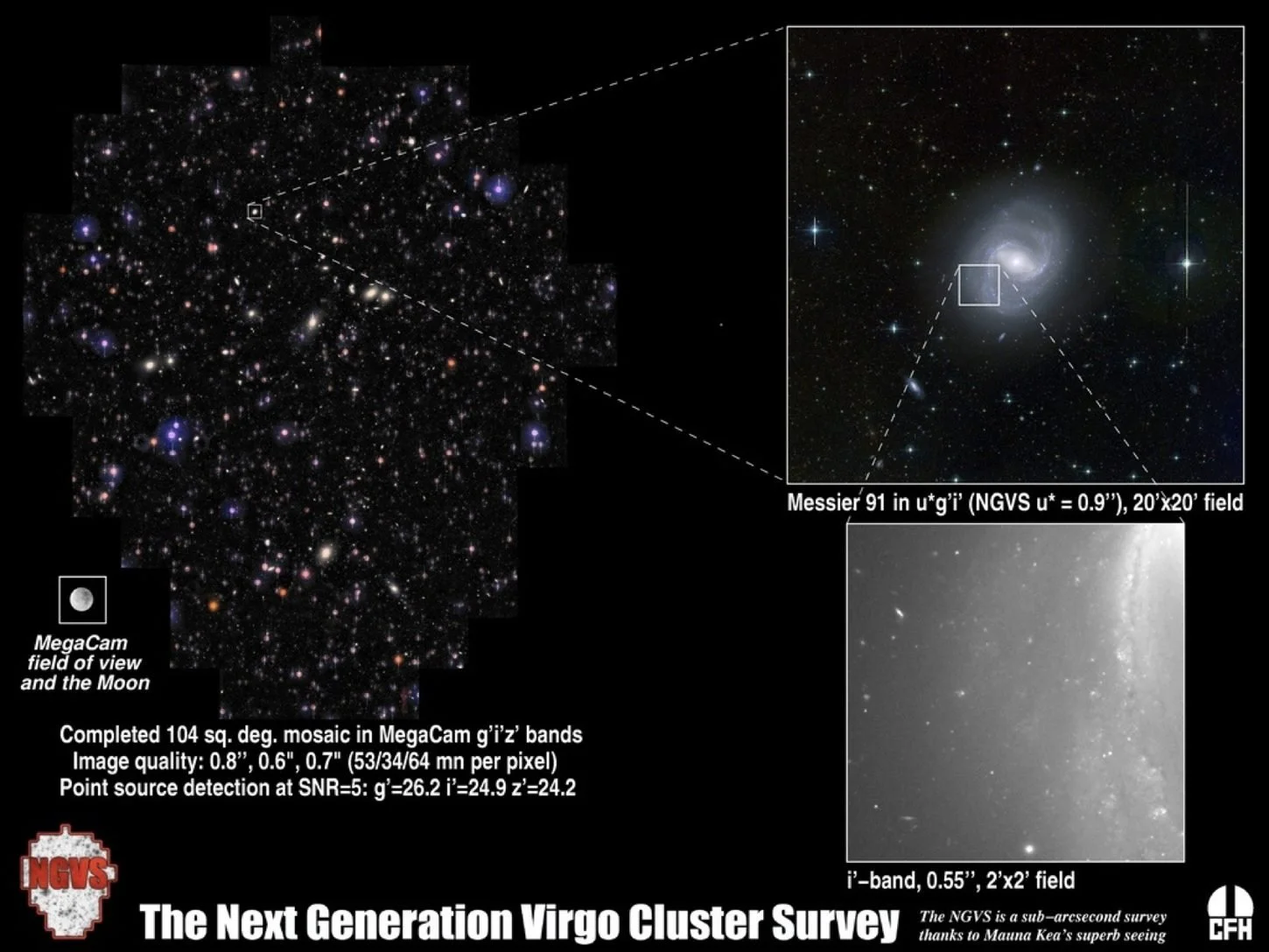
Top left, the full NGVS survey area. Bottom left, an inset with the Moon, demonstrating the massive size of the survey area in relation to the size of the Moon. On the right is a magnified image of the survey area with a very highly magnified inset, demonstrating the exceptional resolution and detail of survey images. Photo courtesy of the NGVS team and Canada–France–Hawaiʻi Telescope.
Using MegaCam, CFHT’s 380-megapixel wide-field camera, an international team of astronomers conducted the Next Generation Virgo Cluster Survey over six observing seasons. The NGVS targeted an area of the sky about 500 times larger than a full moon, with a bold goal: to detect galaxies 15 million times fainter than the dimmest star visible to the naked eye.
The unparalleled observing conditions of Maunakea and the powerful capabilities of CFHT’s MegaCam were essential to the success of the Next Generation Virgo Cluster Survey. MegaCam's wide field of view covers one degree by one degree on the sky, about twice as large as the size of the moon. This is a massive field of view compared to other imagers, making it ideal for studying a large swath of the sky like the Virgo Cluster.
The NGVS team collected thousands of images in 4 distinct filters spanning violet, green, red, and infrared light. “For many imagers, their filters are narrow, capturing, for example, only red or blue light, but MegaCam has a GRI filter that captures green to red and even a little bit of infrared,” said Dr. Heather Flewelling, a CFHT instrument scientist who works with MegaCam. “This means that even if it’s a faint object, we have a better chance of catching it.” The team captured highly detailed images of the entire cluster, from its dense core to its remote edges, revealing objects too faint to be seen in previous surveys.
The final catalog identifies 3,680 confirmed member galaxies, increasing the known galaxy population of the Virgo Cluster by a factor of 2.3 and providing astronomers with an extraordinary new resource for exploring how galaxies form, evolve, and interact over billions of years.
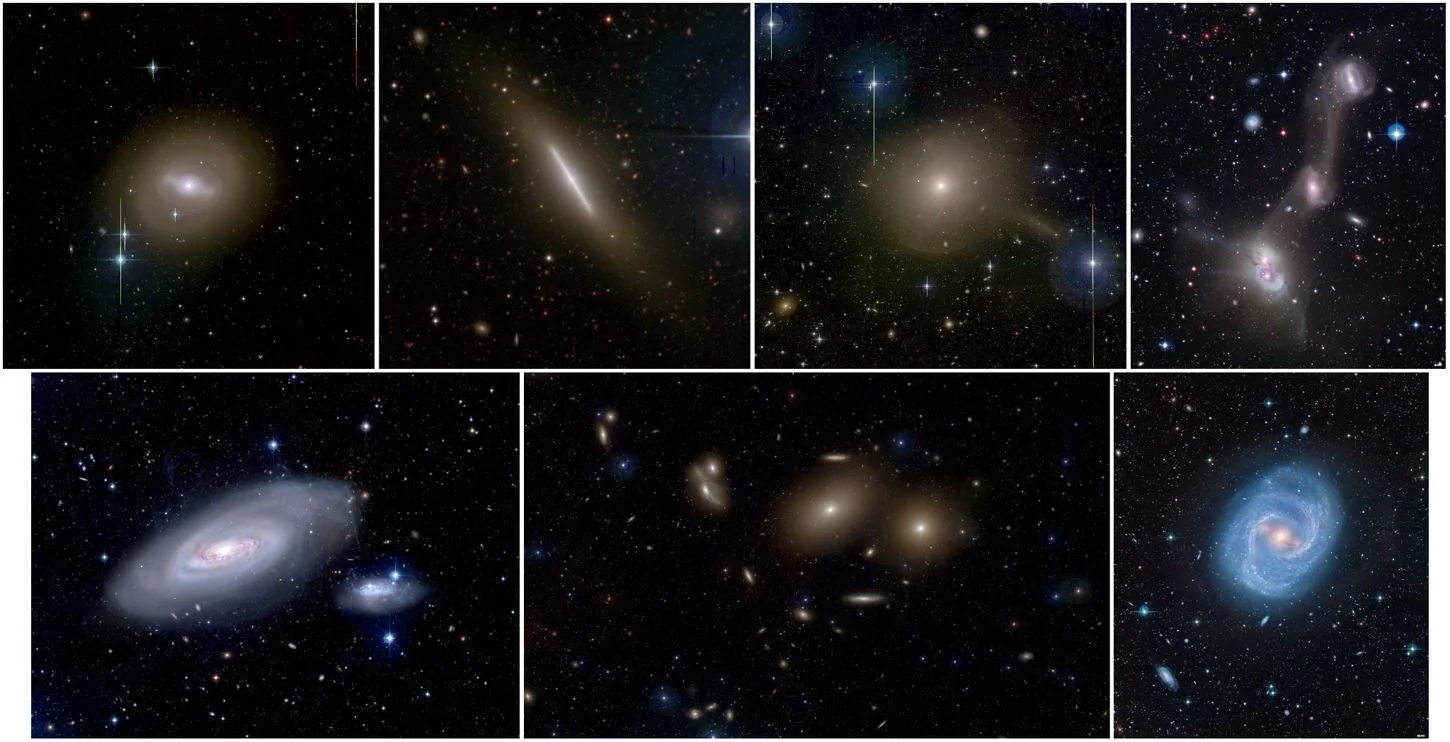
Virgo Cluster galaxies captured by the Next Generation Virgo Cluster Survey. Image courtesy of the NGVS team, CFHT, Jean-Charles Cuillandre and Giovanni Anselmi (Coelum).
Sifting Through the Cosmic Haystack
However, distinguishing Virgo Cluster galaxies from the tens of millions of foreground stars in our own Milky Way and the countless distant galaxies beyond the cluster required more than deep observations alone. Researchers had to develop specialized software capable of identifying true Virgo Cluster members within an immense dataset.
“A project of this magnitude is only possible by collaboration,” said Alexis. Astronomers, software developers, engineers, operations staff, and more all lend their expertise in mapping our Universe. “As telescope operators, one of the joys of our job is taking the data that contribute to a deeper understanding of our galactic neighbors and, by extension, our own galaxy,” she shared.
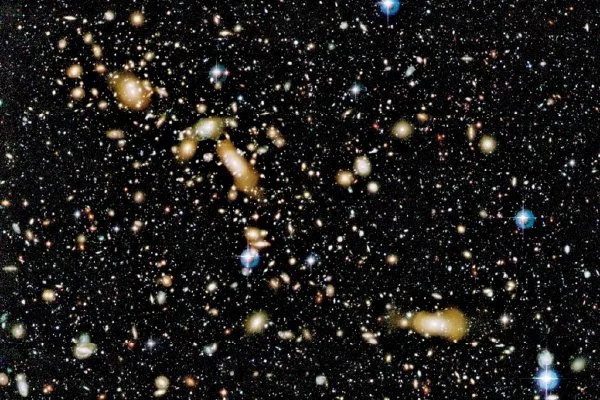
Abell 1553, a massive galaxy cluster located in the same area of the sky as the Virgo Cluster. Photo courtesy of the NGVS team, Canada-France-Hawaiʻi Telescope.
A Treasure Trove of Diverse Galaxies
However, it isn't just the sheer volume of galaxies catalogued that's significant; it's also the incredible diversity of galaxies found in the NGVS. They range from giant elliptical galaxies to never-before-seen, extremely faint smudges that are over 2 million times less luminous. Researchers also catalogued galaxies of many different shapes and evolutionary stages — from smooth ellipticals to spiral galaxies to galaxies distorted by close encounters and interactions.
In this way, galaxies aren’t that different from the huge diversity of lifeforms we have on Earth, said Dr. Ferrarese. "To understand the origin and evolution of life, scientists must study life in all its different forms and stages. Likewise, to understand how galaxies form and evolve, astronomers must observe galaxies in all their bewildering varieties,” she explained, “and the NGVS allowed us to do just that.” Now, the cluster can serve as a “cosmic laboratory,” allowing researchers to study galaxies across an unprecedented range in luminosity and appearance. This will allow future astronomers to gain insight into how diverse types of galaxies form, interact, and evolve.
The completed catalog represents the culmination of more than a decade of observations and analysis. Beyond more than doubling the known galaxy population of the Virgo Cluster, the survey provides an unprecedented resource for studying galaxy formation, evolution, dark matter, and the nearby universe. This definitive map of our nearest giant galaxy cluster will support astronomical research for decades to come.
