
Astronaut Ellison Onizuka Day Returns to Hilo!
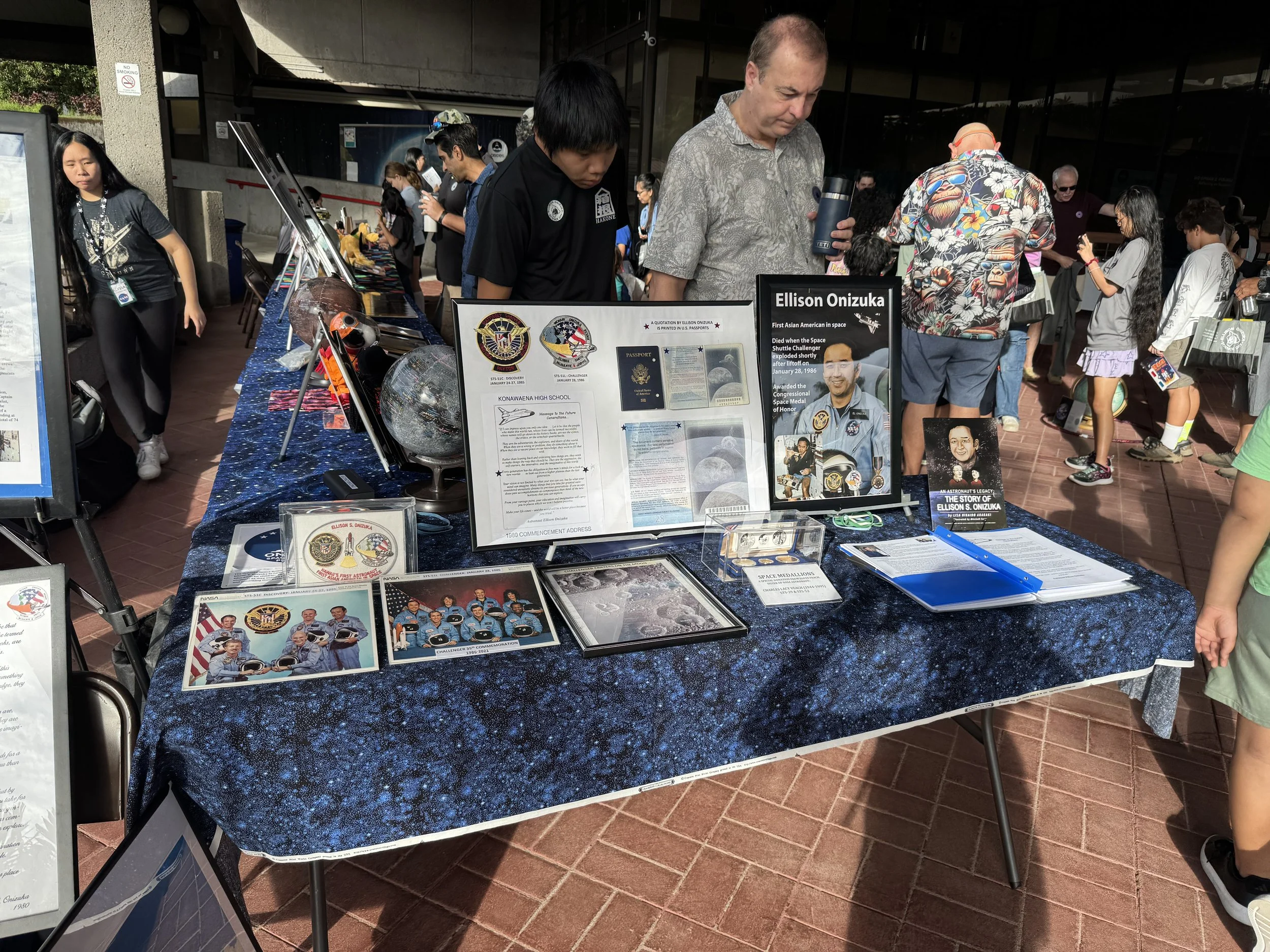
For the first time in five years, the 21st Astronaut Ellison Onizuka Science Day returned to the University of Hawai‘i at Hilo (UHH) on January 24. Nearly 350 students and adults explored science, astronomy, and Hawaiian culture at this community event celebrating Ellison’s incredible legacy as Hawai‘i’s first astronaut and the first Asian American astronaut to reach space.
“It was important to bring back this event because we need to celebrate Hawai‘i’s first astronaut. Ellison Onizuka was a local boy from Kona who grew up to do awesome things and become an aerospace engineer,” said Amber Imai-Hong, co-organizer and PISCES engineer and project manager. “His story was really inspiring to me, and I wanted other kids to be inspired by it as well.”
Onizuka Day went on hiatus following the pandemic, but the event became a possibility again after the UHH campus reopened to the general public. Amber and fellow organizer Ashley Truchan, PISCES Administrative Officer, reached out to the Onizuka family for their approval and support, and in a matter of months, educators and scientists were recruited to participate.
Courtesy of the Pacific International Space Center for Exploration Systems (PISCES)
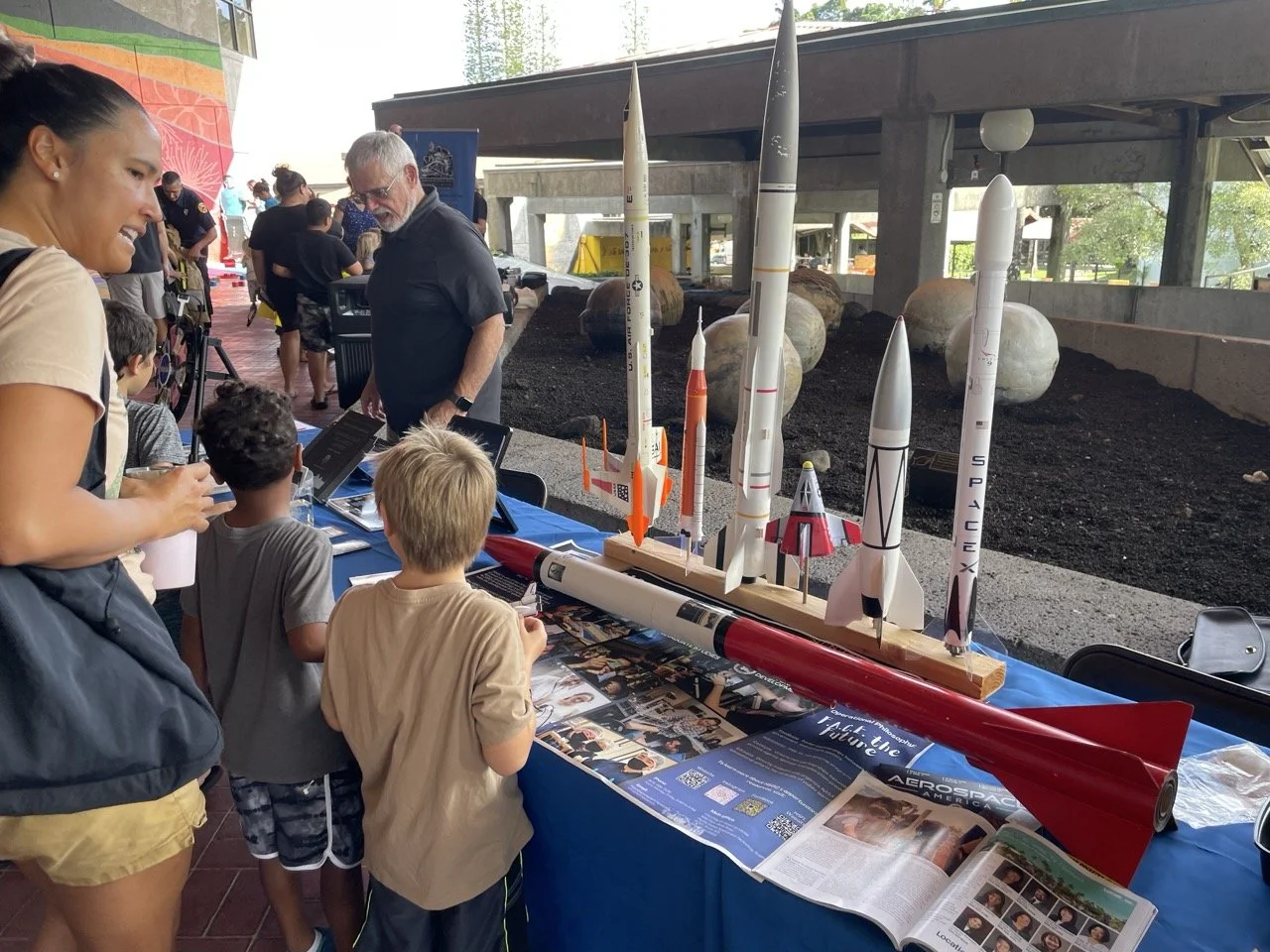
With twelve interactive workshops covering a wide range of topics, Onizuka Day had no shortage of activities, including a science booth, interactive workshops, and a VEX robotics tournament hosted by Maunakea Observatories’ staff. One workshop gave participants the opportunity to meet an astronaut, while others offered a hands-on exploration of the physical sciences, earth sciences, and Hawaiian cultural practices such as wa‘a (canoe) lashing. Some even dove into pop culture topics, such as aliens and radio transmission.
“Our goals were to put together something that was going to be educational and very engaging. I wanted to be able to keep the audience's attention and be able to pass along knowledge relating to science, and especially science that is connected to our observatory here in Hawai‘i,” said Emily Peavy, senior education and engagement specialist with the International Gemini Observatory. She and Kumiko Usuda-Sato from the Subaru Telescope were among the workshop instructors.
Emily taught a workshop about the life cycle of stars, where both students and adults could step inside “Hale Hōkū,” a portable planetarium. They learned the definition of stars, how they function, different life cycles and types, and how to tell the difference between types of stars.
The portable planetarium system is an inflatable unit that fits about 30 people and uses a digital system to pull in various videos and imagery collected from the Gemini North Telescope and other NOIRLab partners. “With the digital planetarium, we can look at the nighttime sky. We can turn on constellations. We’re even able to access Polynesian navigation constellations and use that to teach, and that's always been wonderful. We can pull up Mānaiakalani, Maui’s fishhook in the sky,” said Emily.
Courtesy of the Pacific International Space Center for Exploration Systems (PISCES)
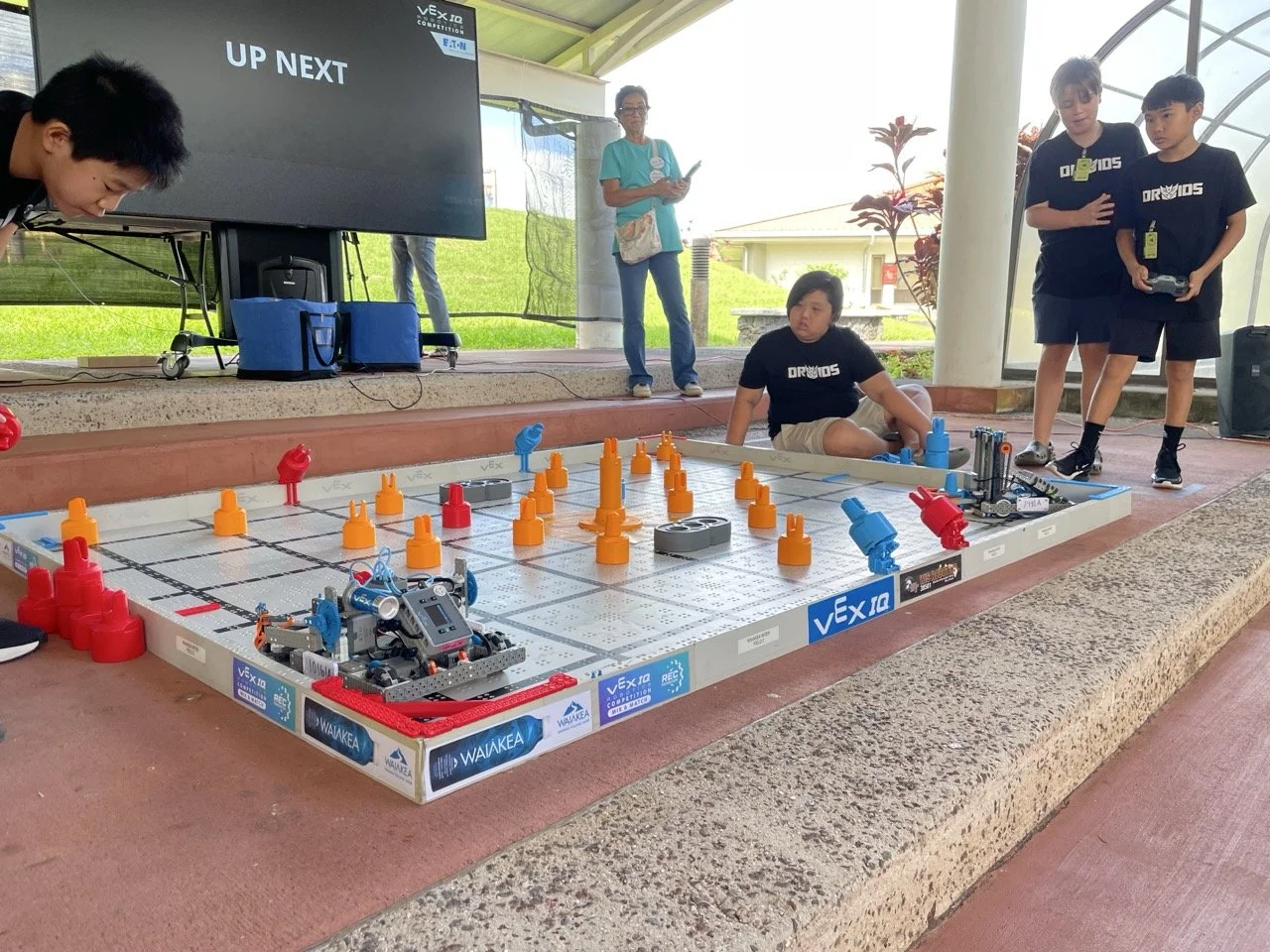
Bringing back the traditions of past Onizuka Days, this year’s event also included a VEX robotics tournament where about 300 students and mentors competed to use their robots in game challenges. VEX tournaments are the culmination of months of the teams’ hard work and league events, which help them advance to the state tournaments.
“There are a ton of skills involved — not just STEM skills but life skills,” said Russell Kackley, Subaru Telescope’s software engineer, VEX robotics organizer, and judge. Students learn about computer science, teamwork, communication, problem-solving, and more.
Judges look for students’ ability to cooperate with one another and to apply the engineering design process, where they test solutions and fix mistakes. “What really gets me excited is seeing students come up with their own ideas. They take ownership of it and make it their own. When I see that, I know why I’m involved," said Russell, who serves as a judge with several of his colleagues at Subaru Telescope.
The perseverance and creative thinking students use in VEX tournaments are skills every good scientist needs, Russell added. “In the workplace, especially technical fields, you’re going to face problems all the time. They may seem insurmountable, but you keep working, and you can usually find the answer.”
It’s these skills that Russell wished he had learned as a young student, and it’s why he became involved in robotics and VEX competitions. He wanted to give the students opportunities and experiences with modern technology that weren’t available when he was growing up. “We need more graduates of the robotics programs to come back, mentor, and teach. If we get more teachers, facilities, and money, we can grow these programs, which is really important.”
Onizuka Day not only highlights Ellison’s legacy as a trailblazer for his community and the world, but it also gives Maunakea Observatory staff the rare opportunity to engage entire families in science. As Amber said, “[Onizuka Day] is really special because it's about families participating in and engaging in science together. Parents get to see how excited their kids are, and the kids get to be inspired by these stories.”
Click to read more about Ellison Onizuka
Mahalo to the 2026 Onizuka Day event sponsors: American Savings Bank, KTA Super Stores and Waiākea Water, PISCES, UH Hilo’s College of Natural and Health Sciences, Hawaiʻi Science and Technology Museum, and the Canada-France-Hawaiʻi Telescope.
