
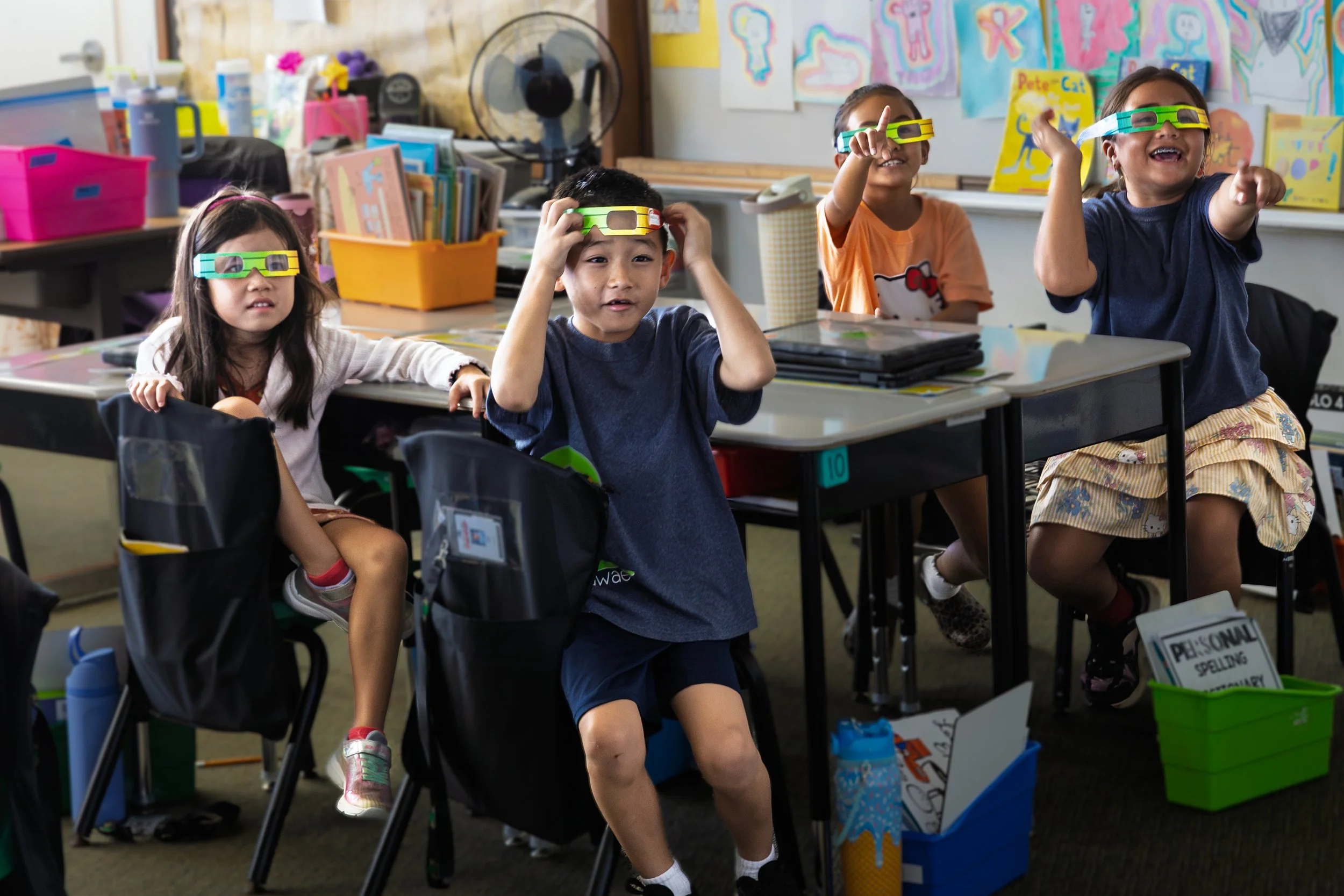
More than 1,400 Hilo-Waiākea students explored the wonder of astronomy during ʻIkuwā Journey Through the Universe (Journey) Week earlier this month. For 23 years, partners at the International Gemini Observatory/NSF NOIRLab and the Department of Education Hilo-Waiākea Complex Area have been running this immersive science and astronomy education program. During Journey, Hilo-Waiākea students of all grade levels (pre-K through 12) engage with hands-on learning experiences led by volunteer educators from the Maunakea Observatories and beyond.
The annual program has been running as a spring session for over two decades, but in 2025 the Journey team decided to expand to a biannual schedule, adding an autumn session during the Hawaiian lunar month of ʻIkuwā. The team decided to take on the challenge of adding a fall semester Journey Week after receiving consistent requests for more classroom visits and overwhelming positive feedback. But this doesn’t just double the impact, said Leinani Lozi, Hawaiʻi Education and Engagement Manager at Gemini and Journey’s lead coordinator. The consistency of being in community and engaging with students year-round creates a cascading impact for these young budding scientists. “More consistently engaging with students has been really rewarding. It adds a depth to the program and allows us to support our students at all levels of learning,” she explained.
One of the big differences between ʻIkuwā Journey Week and the Kāʻelo Journey Week in the spring is the volunteer educators. While the Kāʻelo Journey Week brings partners from beyond Hawaiʻi, both from the continent and globally, ʻIkuwā Journey Week is much more of a local program that primarily brings Hawaiʻi Island-based staff into the classrooms. This gives a different flavor to the presentations, as the staff have more grounding in local culture and values, which they incorporate in their sessions.
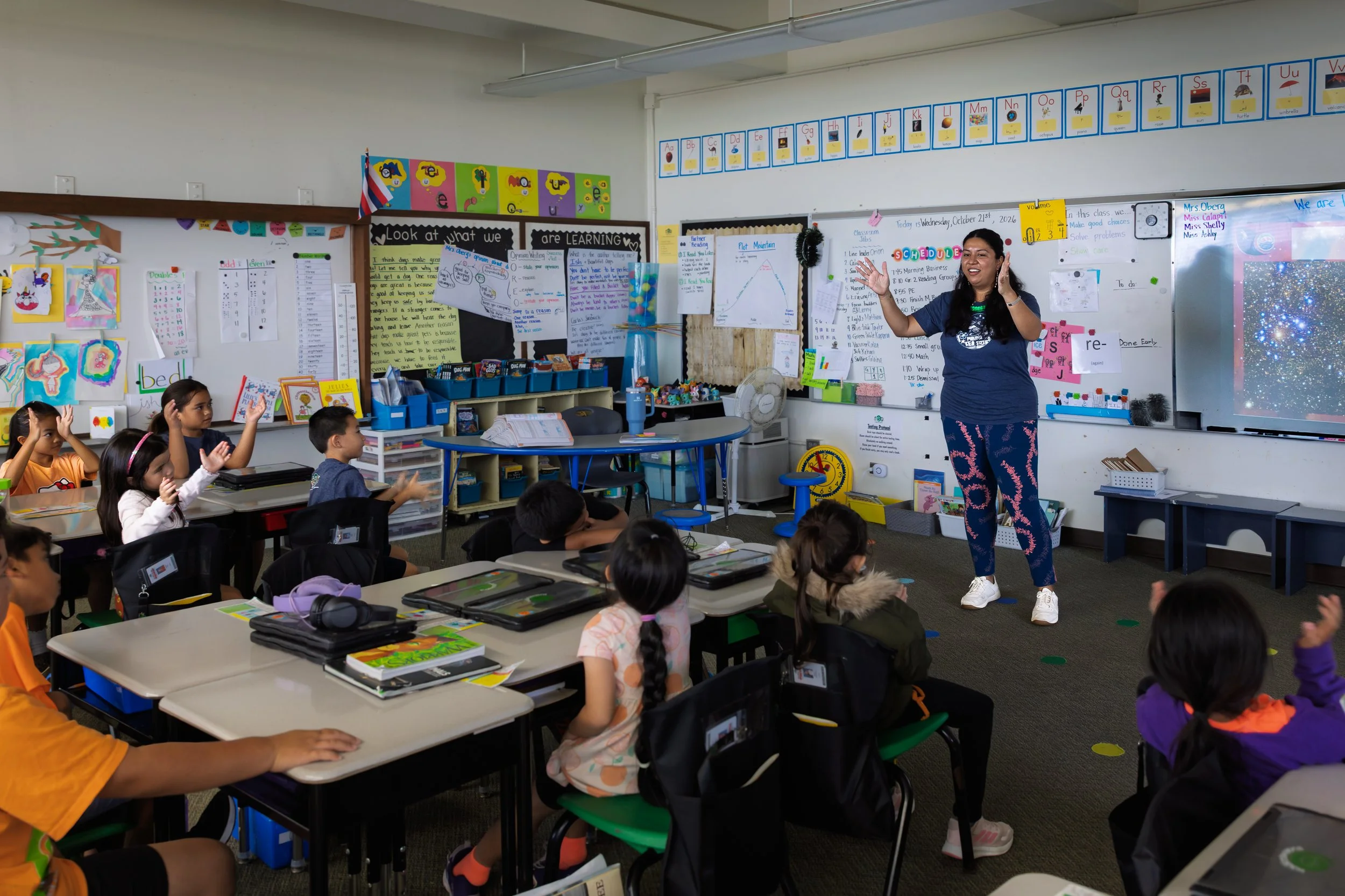
“We always want to make sure what we're sharing in the classroom has strong relevance to everyday life here in Hawaiʻi,” Leinani said. This can look like highlighting the scientific discoveries coming out of Maunakea or connecting lessons to students’ foundational knowledge rooted here in Hawaiʻi. She discusses the volcanic activity of Kīlauea when teaching about Jupiter’s moon Io, the most volcanically active place in our solar system. This helps show students that their lived experiences can connect to what they’re learning about the cosmos.
Creating astronomy education sessions for such a wide range of ages requires creativity, thoughtful planning, and the expertise from Department of Education (DOE) partners on age-specific curriculum. “My goal is to keep things interactive so the kids can learn, have fun, and realize that a future in science is entirely within their reach,” explained Callie Matulonis, research associate at NASA Infrared Telescope Facility (IRTF).
The Journey team and the volunteer educators gather for an annual workshop before the sessions in order to help volunteers translate their topics into hands-on activities curated for specific age groups. “Our DOE partners are the knowledge holders for what will work the best across the grade bands,” said Leinani.
Many students grow up with Journey from elementary to middle to high school. The younger grades focus on sparking curiosity and developing scientific identities, and as students reach middle and high school the focus shifts toward career exploration. “These younger years are more about showing our kids that they can be scientists,” said Leinani. This starts with the Hale Hōkū portable planetarium, in which the littlest students can be immersed in the “giant storybook” of the night sky, learning the stories of planets and stars. From second grade onward, students engage in hands-on and movement-based activities, created in response to teacher feedback. “Journey Through the Universe gets students excited about science in a really fun way,” says Mariesa Venzon, District Educational Specialist at the Hilo-Waiākea Complex Area. “Even after 23 years, we find new opportunities to grow and adapt the program to meet the needs of our schools.”
Volunteer Educators Bring Astronomy to Life
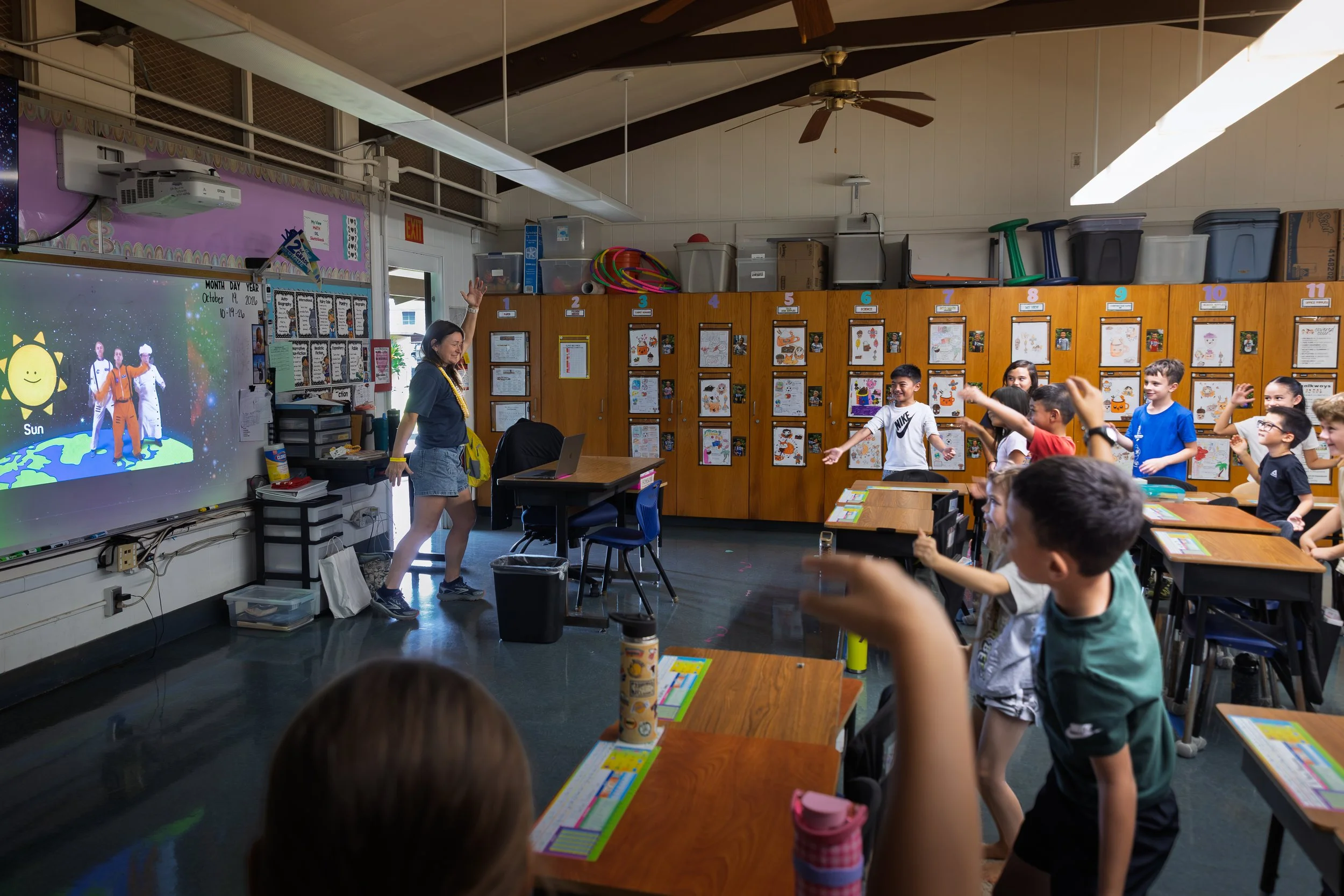
One way the program adapts year-to-year is through the integration of feedback from teachers and students. Their feedback ultimately directs the focus for the entire Journey Week. This year, “The Sun, Moon and Solar System” was the most requested topic by teachers, and volunteer educators crafted lessons to match. Second graders danced their way through the planets with Callie Matulonis. After moving to Hawaiʻi Island as a young adult to intern at Volcanoes National Park, Callie ultimately fell in love with Maunakea and telescope work, which has carried her through a varied career path based here in Hawaiʻi. The constant through it all has been her commitment to engaging with the community and being a part of the reciprocal relationship between the observatories and our people here, said Leinani. “She embodies the idea of being of service to your community.”
Callie shared, “It has been a privilege to participate in Journey Through the Universe for 20 years. Every time I visit a classroom, I think of my late UH Hilo professor, Dr. Richard Crowe, and try to pass on the joy he shared with his students. As a mom, I want to inspire that same curiosity and show young girls that they, too, can have incredible careers on Maunakea.”
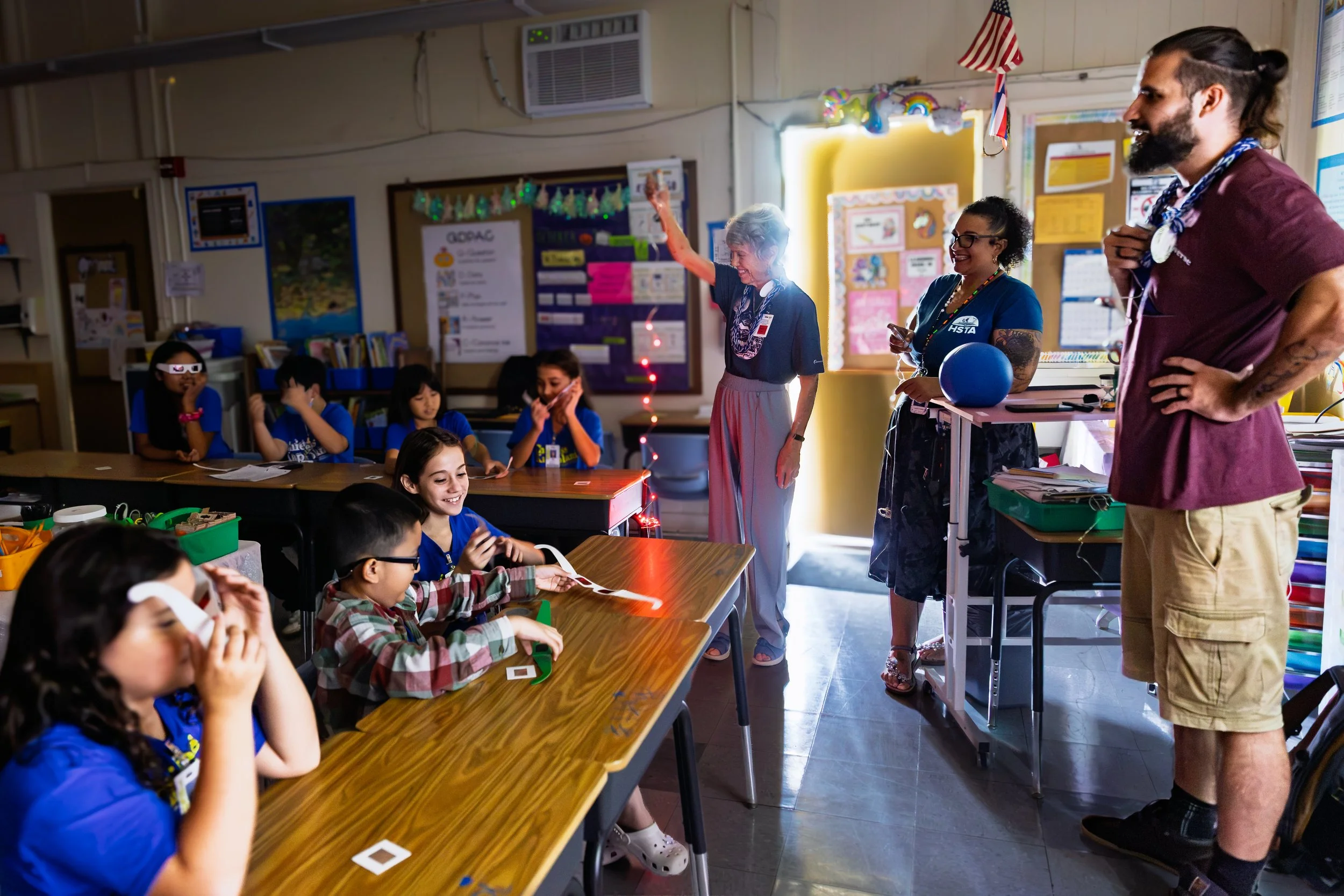
Students also investigated the properties of different wavelengths of light with Sebastien Vievard, Assistant Specialist Faculty at the Space Science and Engineering Initiative (SSEI).
Engaging students from a young age is an essential first step in SSEI’s ultimate goals of building a local astronomy workforce here in Hawaiʻi. “Sebastien is another great example of someone who truly prioritizes giving back to his community,” Leinani said. “The Journey team aims to share a diversity of knowledge and perspectives through educators like Callie and Sebastien.”
For Sebastien, this program is a way to share the same inspiration that motivated him to become an astronomer. He recalled how as a child, scientists telling him about the universe and their work truly inspired him to pursue this career. He shared, “At that age, I think the people we talk to play a crucial role in defining what we want to do in life. Sharing knowledge and nurturing curiosity in our local keiki doesn't just feel like a professional duty as an educator; it's a privilege, a personal responsibility, and I love it.”
Astronomy for the Whole ʻOhana
Beyond classroom visits, Journey continues to expand opportunities for families to experience astronomy firsthand through programs like Maunakea Moongazing, co-led by Maunakea Observatories and the Center for Maunakea Stewardship (CMS). “Our community is made up of more than just the students – it’s parents, it’s kūpuna, it’s teachers. So it’s important to us to have families experience Maunakea too, [and] get to know us and what we’re doing up there,” said Leinani. On October 17, 2026, more than 70 Hilo-Waiākea students, teachers, staff, and ʻohana gathered at Hale Pōhaku, Maunakea’s mid-level facilities, for an evening of stargazing, telescope viewing, moʻohōkū (Hawaiian star stories), and hot cocoa beneath the light of the ʻolekūlua Moon.
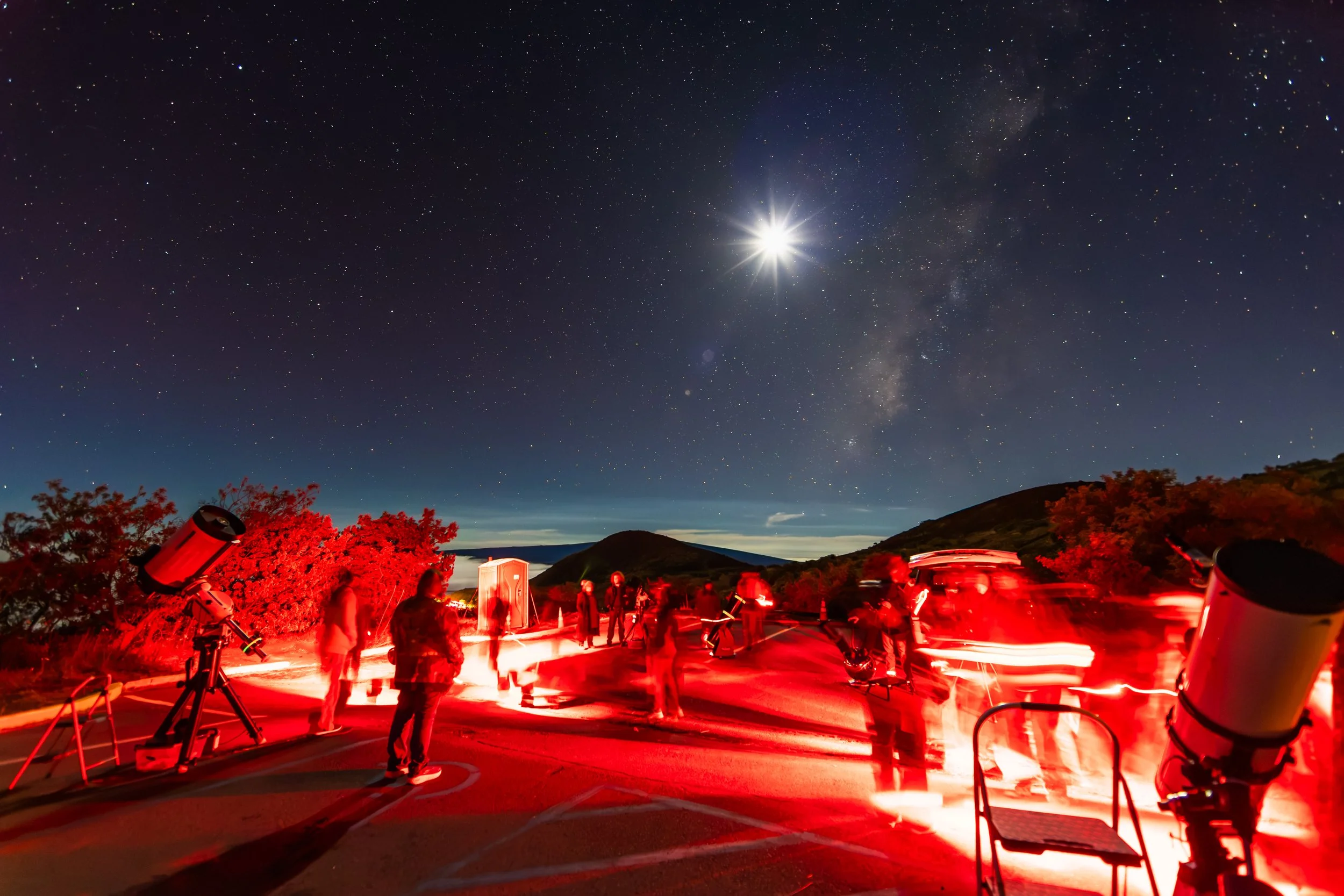
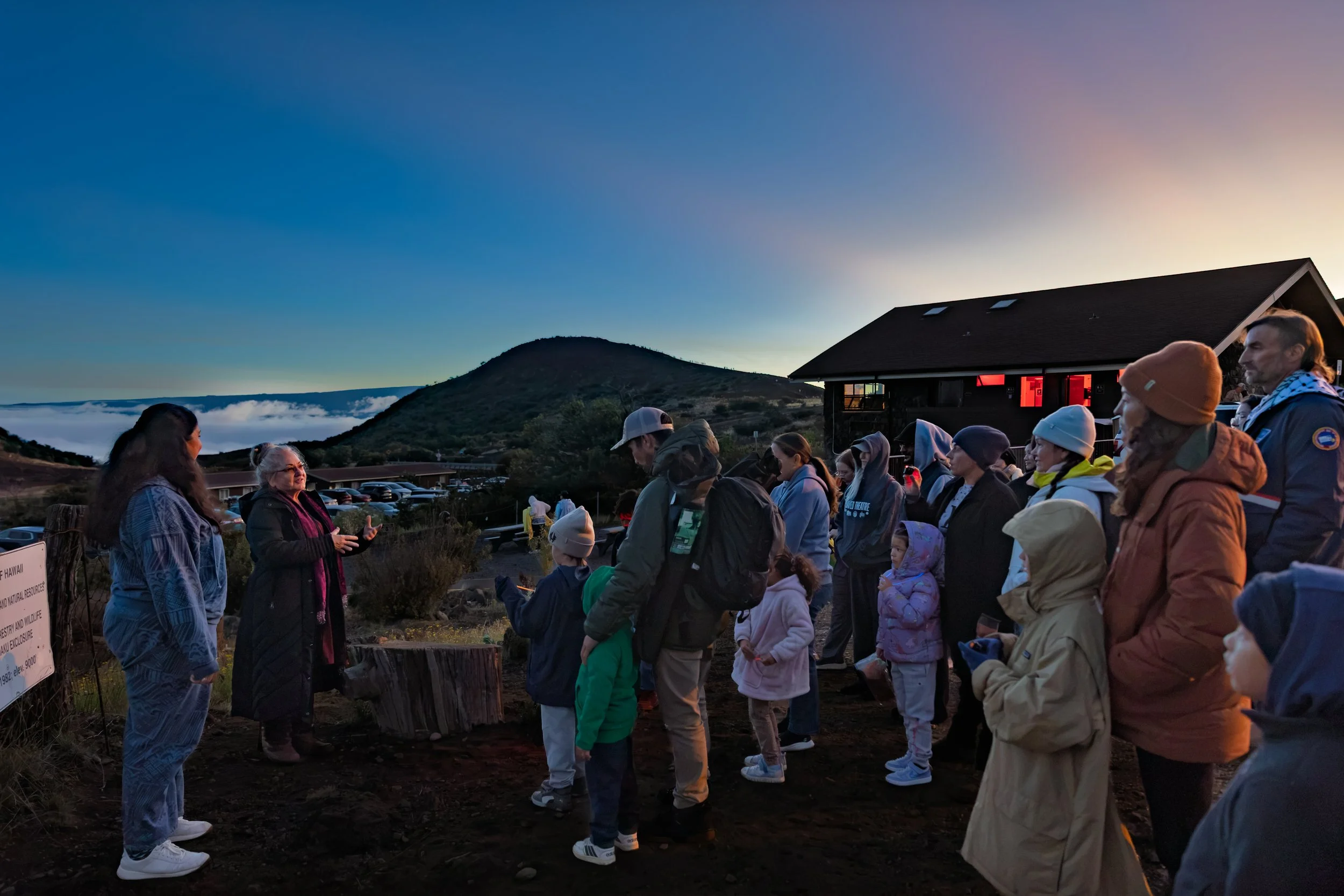
Through the partnership of regular CMS volunteers and their telescopes, combined with extra staff and equipment from MKOs, this most recent event was able to accommodate twice as many people than the monthly events. Hot cocoa and snacks ensured that families stayed warm and felt taken care of, and Leilehua Yuen’s Hawaiian star storytelling brought the night sky above to life.
Jasper Oshun, a parent for Haʻaheo Elementary, shared, “None of us had ever seen Saturn’s rings. My daughters, who are 6 and 2, experienced their first look through a telescope. It was a really special experience.”
“Working on Maunakea is an incredible privilege that comes with a lot of kuleana,” Leinani shared. Part of that kuleana is to facilitate these powerful experiences for other people. “Just being under that night sky and learning all these things is an unforgettable experience for a lot of our families.” Sharing astronomy with ʻohana also supports students in their science journeys, she said. "Your family is such a big part of who you are and who you become. If we want our kids to have a strong sense of science identity, there needs to be support from their family as well.”
Exploring Astronomy Careers
Another new element of Journey Week from this past year is the opportunity for high school students to visit the Gemini North Telescope on Maunakea, marking the peak of their many years of Journey participation and hopefully inspiring them to pursue a career in astronomy. Journey is expanding these opportunities further, planning to offer five field trips during the 2026–27 school year, giving more students an opportunity to learn firsthand about the scientific work taking place on Hawaiʻi Island. “Many of our summit staff are local, and once were students like them at Hilo or Waiākea High,” explained Leinani. “That resonates very strongly with students: knowing that there are amazing career opportunities in astronomy right here at home.” Journey will continue its programming throughout the school year, including another week of classroom visits and career panels planned for Kāʻelo in 2027.
