
ʻŌnohiʻula: Subaru Telescope’s PFS Instrument Receives Hawaiian Name
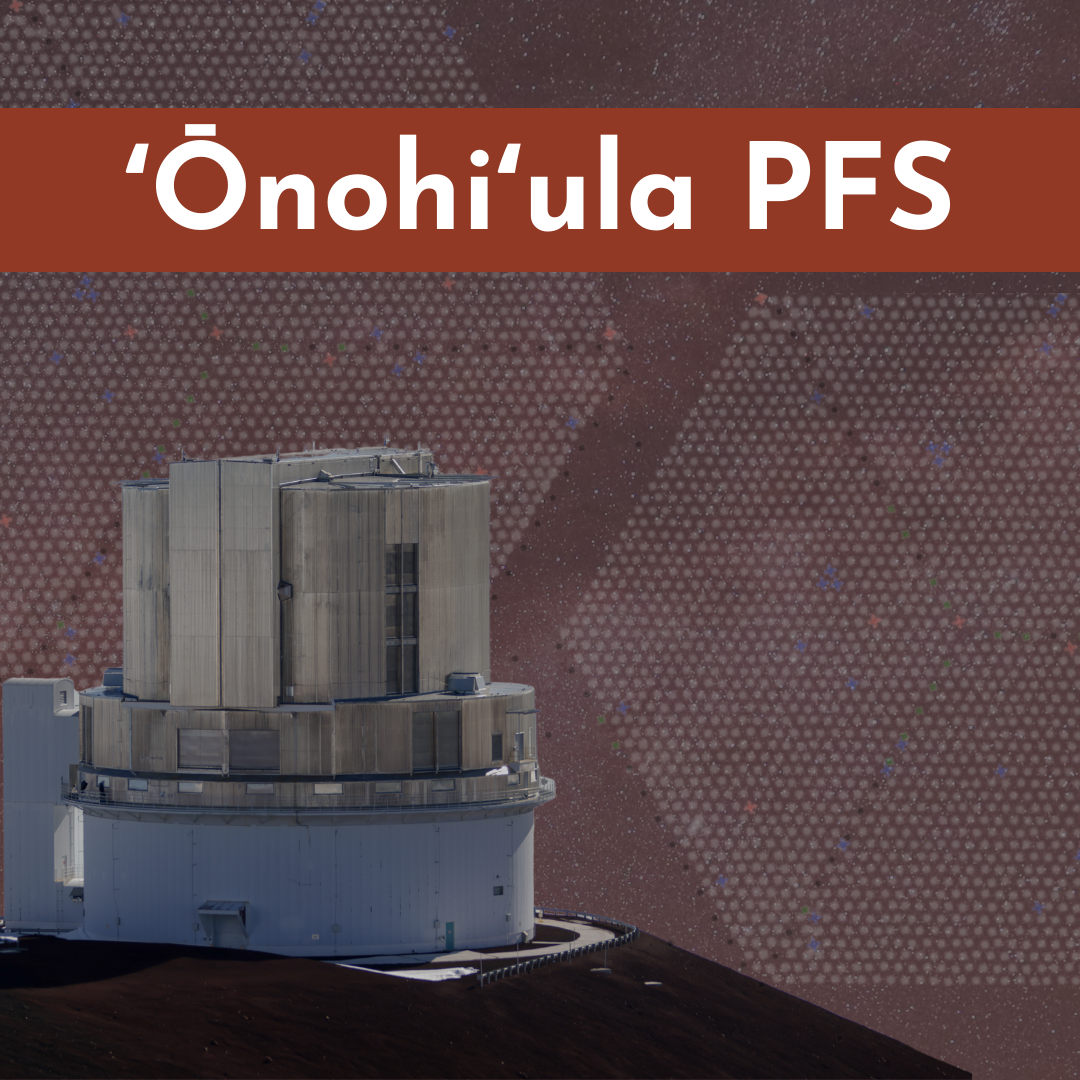
The new Prime Focus Spectrograph (PFS) at the Subaru Telescope on Maunakea was given the Hawaiian name ʻŌnohiʻula, presented by Dr. Larry Kimura, professor of Hawaiian language and Hawaiian studies at the University of Hawaiʻi at Hilo. ʻŌnohiʻula carries multiple layers of meanings — how the instrument perceives the cosmos much like our eyes perceive light, as well as the color red and its association with the sacred realm of origin in Hawaiian culture.
PFS: an Exciting New Arrival to Subaru
ʻŌnohiʻula PFS was a much-anticipated addition to the Subaru inventory. The project first began in 2010-2011, and during the development since then, great attention began to turn towards the PFS instrument. “The Prime Focus Spectrograph came to be well-known and well-established by the time it began operations in February 2025. Many people were fascinated by the possibilities this instrument could hold,” explained Dr. Naoyuki Tamura, project manager of the ʻŌnohiʻula PFS instrument, associate director for instrument engineering, and professor at the Subaru Telescope at the National Astronomical Observatory of Japan.
ʻŌnohiʻula PFS is a spectrograph system that can observe the spectra, or full range of light being emitted, of ~2,400 celestial objects simultaneously. Part of the instrument system is installed on the prime focus of the Subaru Telescope, allowing it an extremely wide field of view. It is equipped with ~2,400 fibers, each of which is aligned to the location of an individual celestial object. The light from the celestial objects travels through the fibers and enters the Spectrograph System with four identical spectrograph modules, which splits the light into three channels — blue, red, and near-infrared. Each of those three channels disperses the light into a color spectrum, which allows researchers to see a “rainbow” of each celestial object.
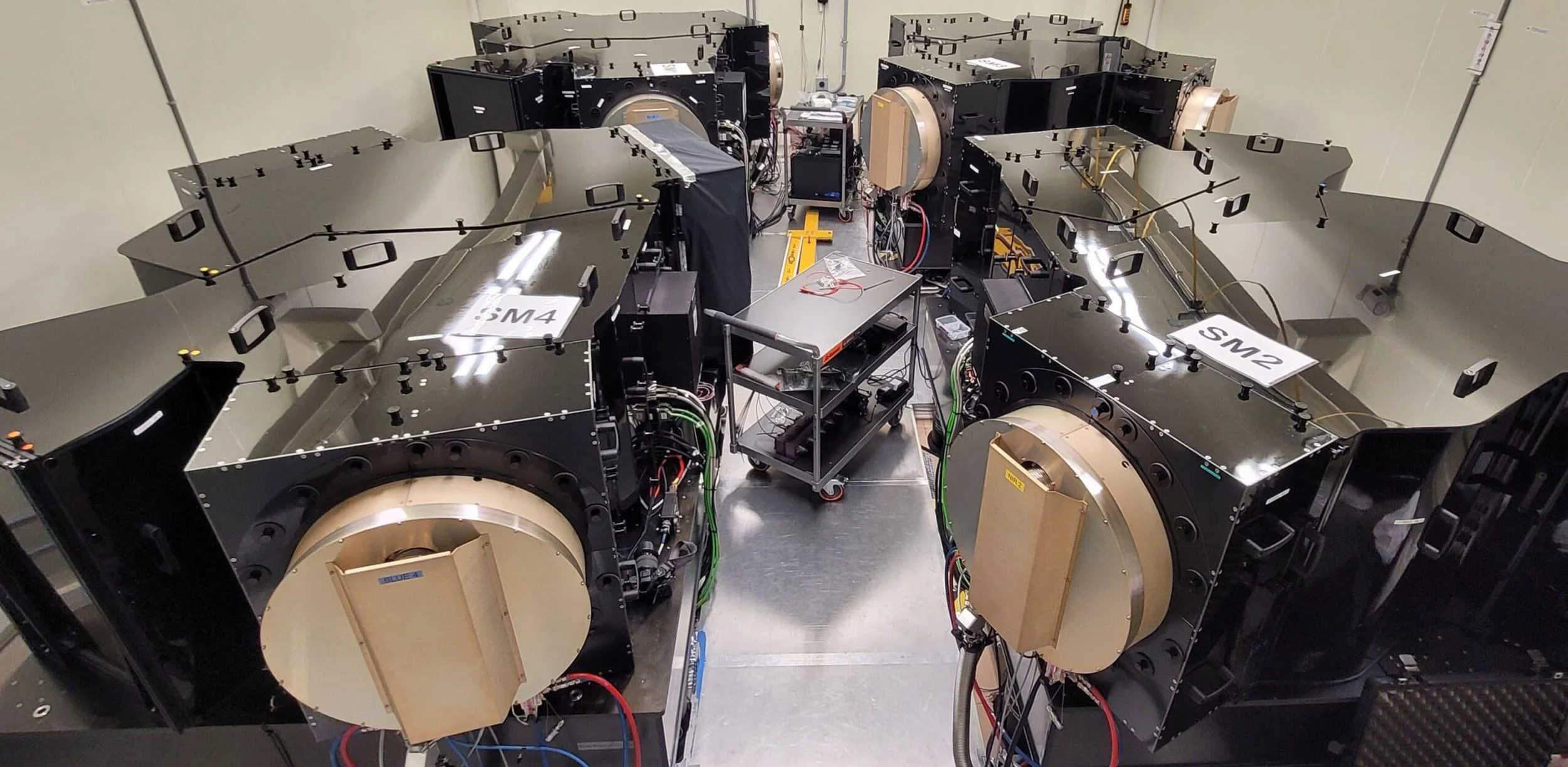
Credit: Subaru Telescope
Using the spectra, scientists are able to determine much about the celestial objects they are observing — their distances from Earth, how fast they are moving, and characteristics of the stars and galaxies, such as age and composition. The ability to observe 2,400 objects at once plus ʻŌnohiʻula PFS’s ideal position at the prime focus of the telescope means it can shorten months- or even years-long missions into just a few nights.
Calling Forth a Name for PFS
The practice of giving Hawaiian names has been driven by the work of the A Hua He Inoa program at the University of Hawai‘i at Hilo’s ʻImiloa Astronomy Center. A Hua He Inoa, meaning “to call forth a name,” brings together diverse groups of Hawaiian cultural practitioners, astronomers, and local students, who are immersed in ʻōlelo Hawai‘i (Hawaiian language), read various moʻolelo (Hawaiian stories), and collaborate to choose a name for an astronomical object.
The idea of giving the PFS instrument a Hawaiian name had been floating around the collaboration for quite some time as one direct action they could take to pay respect to the instrument’s home in Hawai‘i. The concept remained in the air until the instrument actually arrived in Hawai‘i, prompting the researchers to revisit the topic. They were motivated to invite a Hawaiian cultural practitioner to generate an opportunity for non-Hawaiians to think critically about Maunakea and Hawaiian culture and how best to show respect in January 2025, which was hosted at the Kavli Institute for the Physics and Mathematics of the Universe (Kavli IPMU) in Japan. “It’s a rare opportunity for non-Hawaiians to get to listen to those stories told and hear the concepts behind them, which inform how we care for the environment,” Naoyuki said. The idea to name PFS then continued to grow out of these learnings. Later that month, the collaborators decided to pursue finding a Hawaiian name for PFS. They discussed with Imiloa staff who have been involved in past namings, such as Pōwehi and ʻOumuamua. Dr. Devin Chu, Astronomer-in-Residence at ʻImiloa, joined in as a crucial point of connection between the PFS team and Dr. Larry Kimura, who eventually gifted PFS the name ʻŌnohiʻula.
Chu then shared the purpose and methods of the PFS instrument with Larry to find a Hawaiian name that fit. “Larry already knew what kind of questions to ask,” said Chu. “We explored many possibilities,” he continued, “with Larry thinking out loud and exploring this instrument aloud, together.” In other naming conventions for celestial objects, there have been multiple potential options, but in this case, ‘Ōnohi‘ula fit just right.
One of their central questions was understanding the history of the universe and where we come from. In Hawaiian cosmology, the Kumulipo ancient creation chant contains much of that knowledge, while in astronomy, redshifted galaxies provide much of that understanding. “This was a prime example of holding multiple ways of knowledge,” said Chu. Bringing together these two bodies of knowledge — Hawaiian ancestral knowledge and Western science — gives us a fuller vision of how to understand our universe.
What a Name Holds
In the name ‘Ōnohi‘ula, the ‘Ō gives brightness and luminosity to the subsequent word. Nohi connotes “eye,” but rather than your physical eye, it’s what you are perceiving or what your eye is telling you — how ‘Ōnohi‘ula PFS serves as our eye to the universe. ‘Ula means “red,” referring to the sacred red of our realm of origin. “What really struck me was the complexity of the Hawaiian language — hearing Larry talk about the depth of meaning and the many meanings encapsulated in a single word,” said Chu.
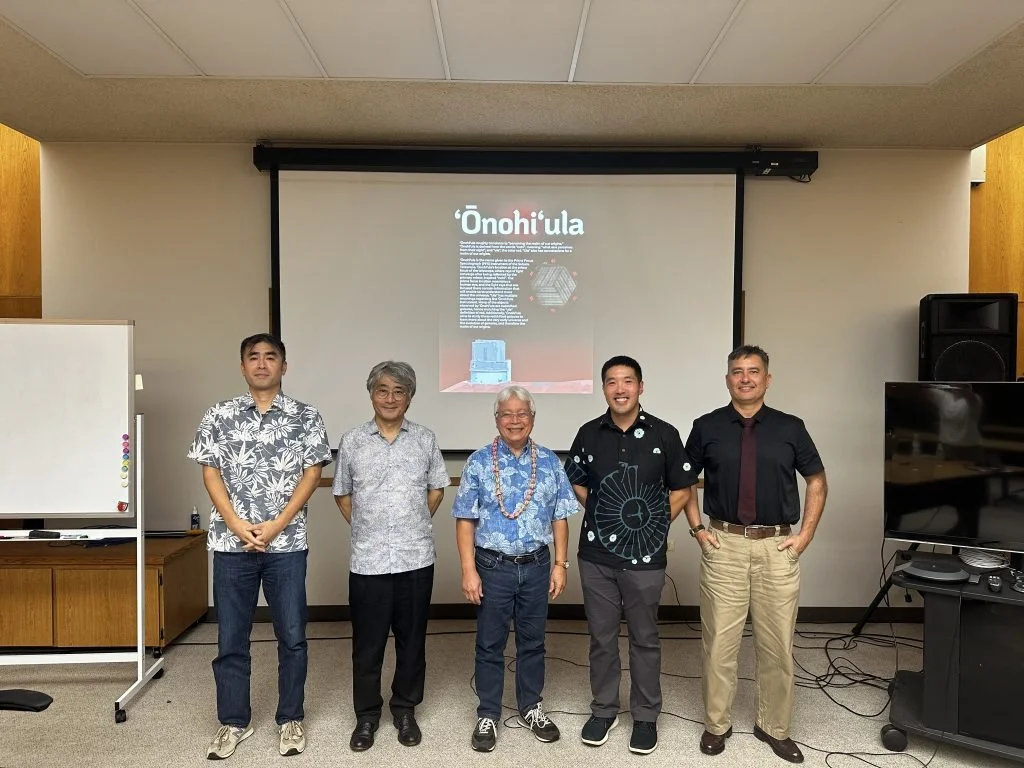
A formal naming ceremony was held at Subaru Telescope’s base facility in Hilo on November 19, 2025. Principal investigator Dr. Hitoshi Murayama of Kavli IPMU traveled from Berkeley to participate in the naming ceremony, during which he gave a presentation on the instrument mechanism and the scientific goals of Ōnohi‘ula PFS. After hearing his presentation, Larry reconfirmed to the team that he felt the name Ōnohi‘ula was a perfect match. Naoyuki emphasized that this success motivates his team to pursue giving Hawaiian names to future instruments and encourages their colleagues to consider doing the same.
“I’m not from here,” added Dr. Kumiko Usuda-Sato, astronomer and public outreach specialist at Subaru Telescope, “but when I learn about Hawaiian culture and Kumulipo, I recognize that astronomers and native Hawaiians have the same ‘eye.’ We want to know who we are, where we came from, and where we’re going.” The researchers hope that this name will prompt people to see astronomy and Hawaiian culture as two interwoven ways of knowing.
Both parts of the name complement each other, Naoyuki explained: “PFS is the method, and ‘Ōnohi‘ula is the meaning or vision behind it.” Together they paint the full picture of what this instrument aims to do, grounded in the rich history of Hawaiian language tradition and the instrument’s unique home on Maunakea.
To learn more about ‘Ōnohi‘ula PFS, check out the PFS Blog and Subaru Telescope’s press release.
