
A Discovery Rooted in Community: How a Citizen Scientist's Discovery Brings Leilani to the Stars
A Discovery Rooted in Community
Most evenings, Todd Fisher scans archival images of the night sky. It isn't part of his job. It's simply how he likes to unwind.
Over the course of three years, those quiet evenings became something much more. Using data collected by the Subaru Telescope, Todd discovered a previously unknown asteroid and was given the opportunity to propose its name.
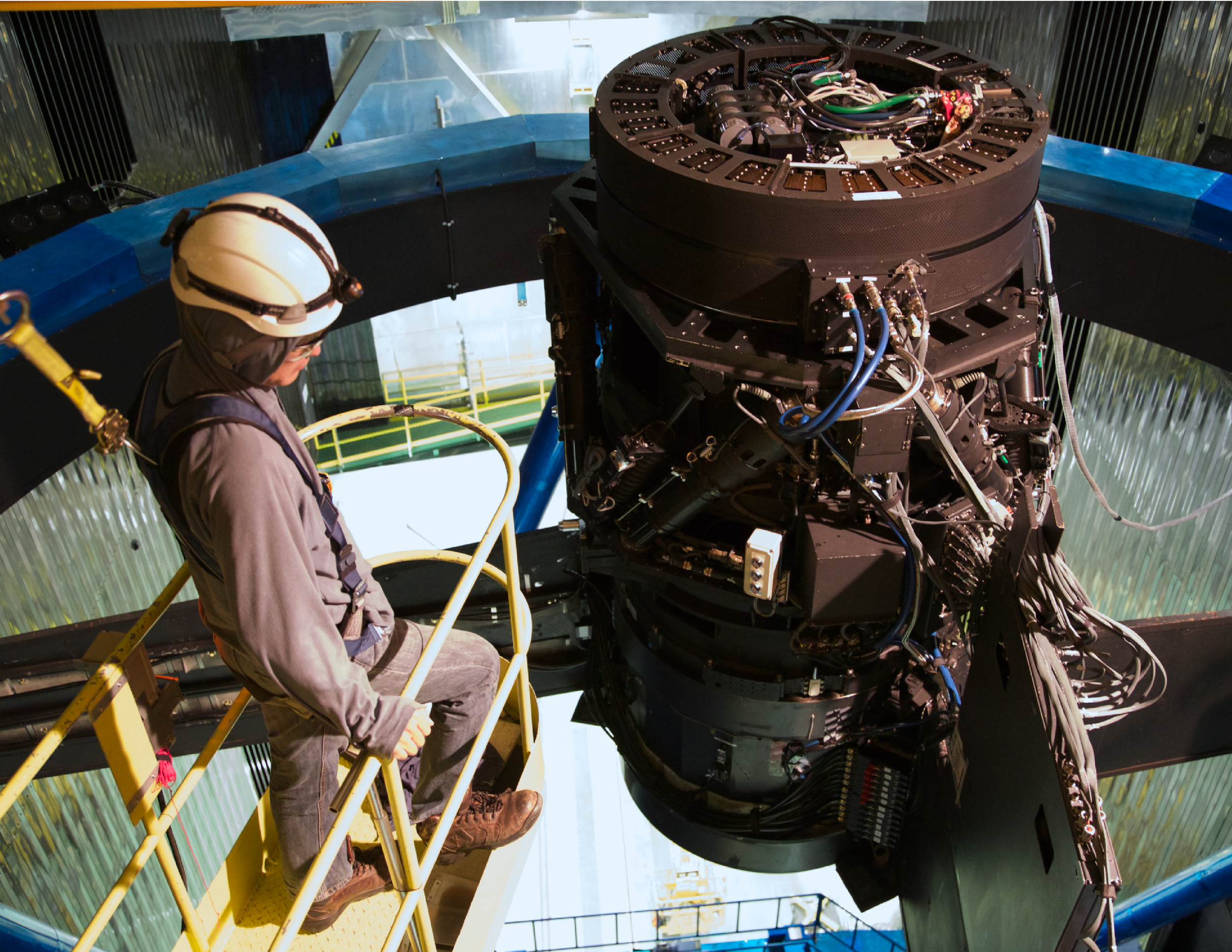
Hyper Suprime-Cam (HSC), the 870-megapixel camera mounted on the Subaru Telescope, is used to capture the archival images analyzed by volunteers participating in the COIAS citizen science project. Photo credit: NAOJ/Subaru Telescope
He chose Leilani.
Although Todd’s background is in economics and political science rather than astronomy, he began volunteering with COIAS (Come On! Impacting ASteroids), a citizen science project that invites members of the public to help search archival images captured by the Subaru Telescope's Hyper Suprime-Cam for previously unknown small solar system objects.
"I didn't really know a whole lot about astronomy before I started participating," Todd said. "I just started getting interested in astronomy back in 2023."
Over the last three years, Todd has examined thousands of archival images and contributed to numerous discoveries alongside volunteers around the world. Among them was a previously unknown object in the Subaru Telescope data collected between 2016 and 2017 that would later become asteroid Leilani.
For Todd, however, the discovery quickly became something deeply personal. The opportunity to propose a name allowed him to honor a place that shaped his family and forever connect it with the night sky.
Science Belongs to Everyone
Todd’s story reflects the growing role citizen scientists play in modern astronomy.
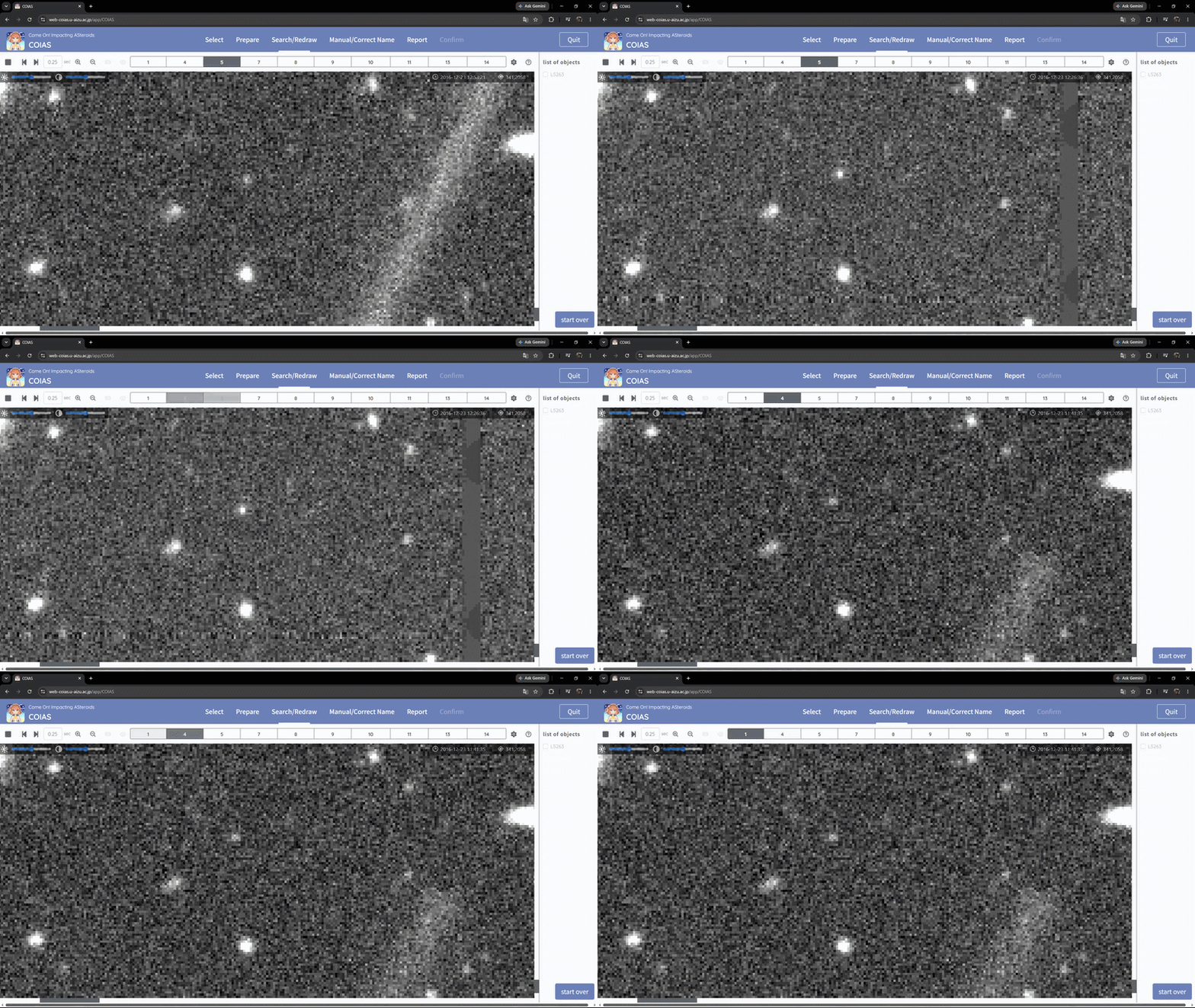
Photo Credit: Screen captures by Todd Fisher using COIAS. Discovery imagery courtesy of NAOJ/Subaru Telescope and COIAS.
Through COIAS, volunteers analyze real astronomical data, measure moving objects, and submit observations that help researchers identify new asteroids and other celestial objects.
"There is real science being done," Todd said. "Young people can get involved and take part. Right now is the best time to do it!"
"I've probably measured thousands of different minor planets," he said. "This is the only one I've actually discovered on my own."
For Todd, what was most surprising wasn't simply that anyone could participate; it was that meaningful scientific discoveries were genuinely within reach.
He credits the discovery not only to his own work but also to the many collaborators who helped confirm it, including fellow volunteers, professional astronomers, and major sky surveys that provided additional observations needed to establish the asteroid's orbit.
"It's really a great collaboration," Todd said. "I've met people from Japan, China, Poland — pretty much all over the world. We're all independently working together."
That collaborative spirit is central to both the discovery itself and the broader mission of citizen science. While professional observatories like the Subaru Telescope collect extraordinary amounts of astronomical data, projects like COIAS allow members of the public to help unlock the discoveries hidden within it. Together, professional astronomers and volunteers contribute pieces of a much larger scientific picture.
Why Leilani?
Once an asteroid's orbit has been confirmed, discoverers are invited to propose a name for consideration by the International Astronomical Union (IAU). For asteroids discovered through COIAS, researchers at Subaru Telescope authorize participating citizen scientists to propose names in recognition of their direct role in the discovery. For Todd, the decision wasn't about creating something entirely new. It was about remembering a place.
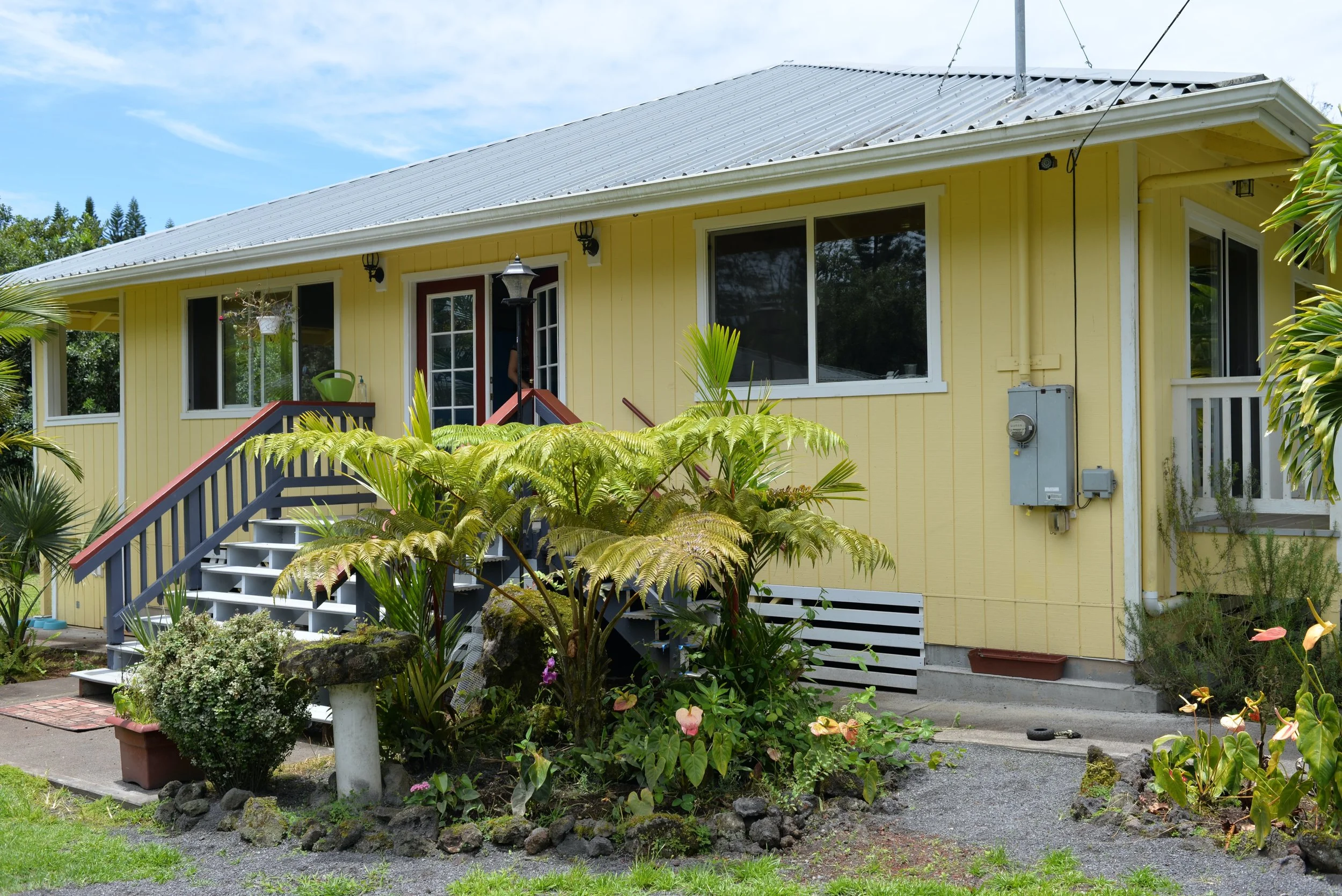
Former home of Todd Fisher's sister and family in Leilani Estates before it was buried during the 2018 Kīlauea eruption. Photo Credit: Kevin Fisher
Todd proposed the name "Leilani" as a tribute to the Hawaiʻi community of Leilani Estates, a place that continues to hold deep significance for his family. Before Kīlauea’s 2018 eruption, Todd’s sister, nieces, and many close friends called the community home. Their homes, located in Leilani Estates, were eventually buried beneath nearly 20 feet of lava.
Rather than remembering only what was lost, Todd wanted the asteroid to preserve the memory of the place they loved. "I wanted them to be able to remember their home from when they were young children," he shared. "I loved the name Leilani, and I thought it was a beautiful name for an asteroid."
Todd worked closely with his family throughout the naming process, asking his sister, parents, and nieces for their thoughts before submitting the proposal. "I wanted to do something to commemorate what happened there," he said. "A lot of people lost everything, and it was important to me to get their feedback before naming something."
His hope wasn't to memorialize tragedy but to preserve memory.
"I hope they remember the good places and the good times," Todd said. "Don't focus on the bad times."
In many ways, this asteroid became another way for the community's story to endure.
For Todd’s nieces, the asteroid offers another way to remember the community where they spent their childhood, a place that is physically changed forever but continues to be remembered in family stories and now, in a small corner of our solar system.
Looking Up Together
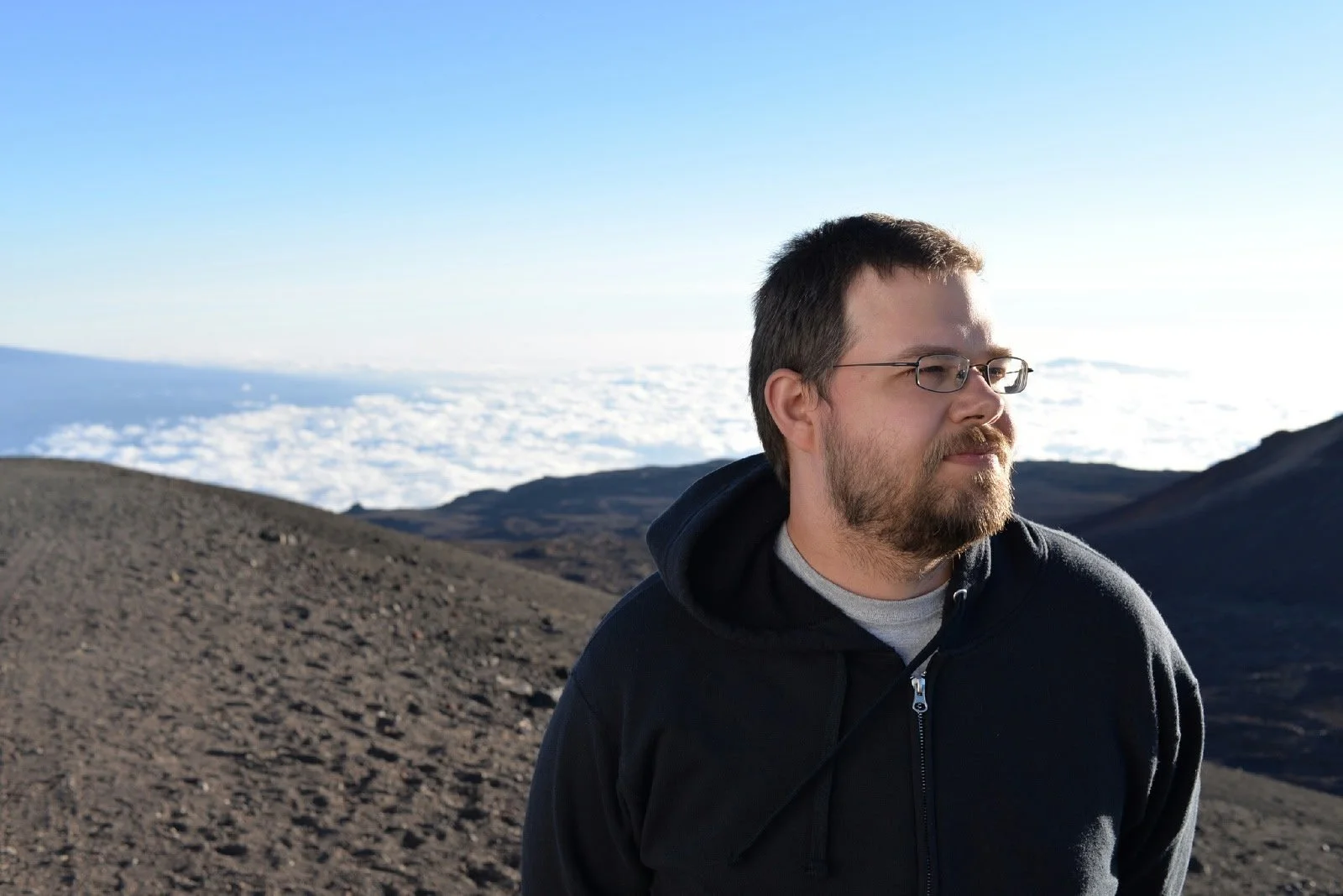
Photo Credit: Kevin Fisher
Today, Todd still spends many evenings searching archival images. "It helps me chill at the end of the day," he said. "You never know what you're going to find. Anybody can start now and probably find a new asteroid or make contributions to science."
In Todd’s case, that curiosity expanded our knowledge of the solar system while preserving the memory of a place that shaped his family.
What began as a quiet evening hobby became something much larger: a reminder that scientific discovery isn't reserved for professional astronomers. Sometimes it begins with someone willing to look a little closer and ends with a community's story carried across into the night sky.
Asteroid Facts:
Official designation: (870437) Leilani (formerly 2017 AS63)
Discovery date: January 2, 2017
Discovery project: COIAS (Come On! Impacting ASteroids)
Observatory: Subaru Telescope, Maunakea
Official naming: Published by the International Astronomical Union Working Group for Small Bodies Nomenclature (WGSBN) on April 13, 2026.
