
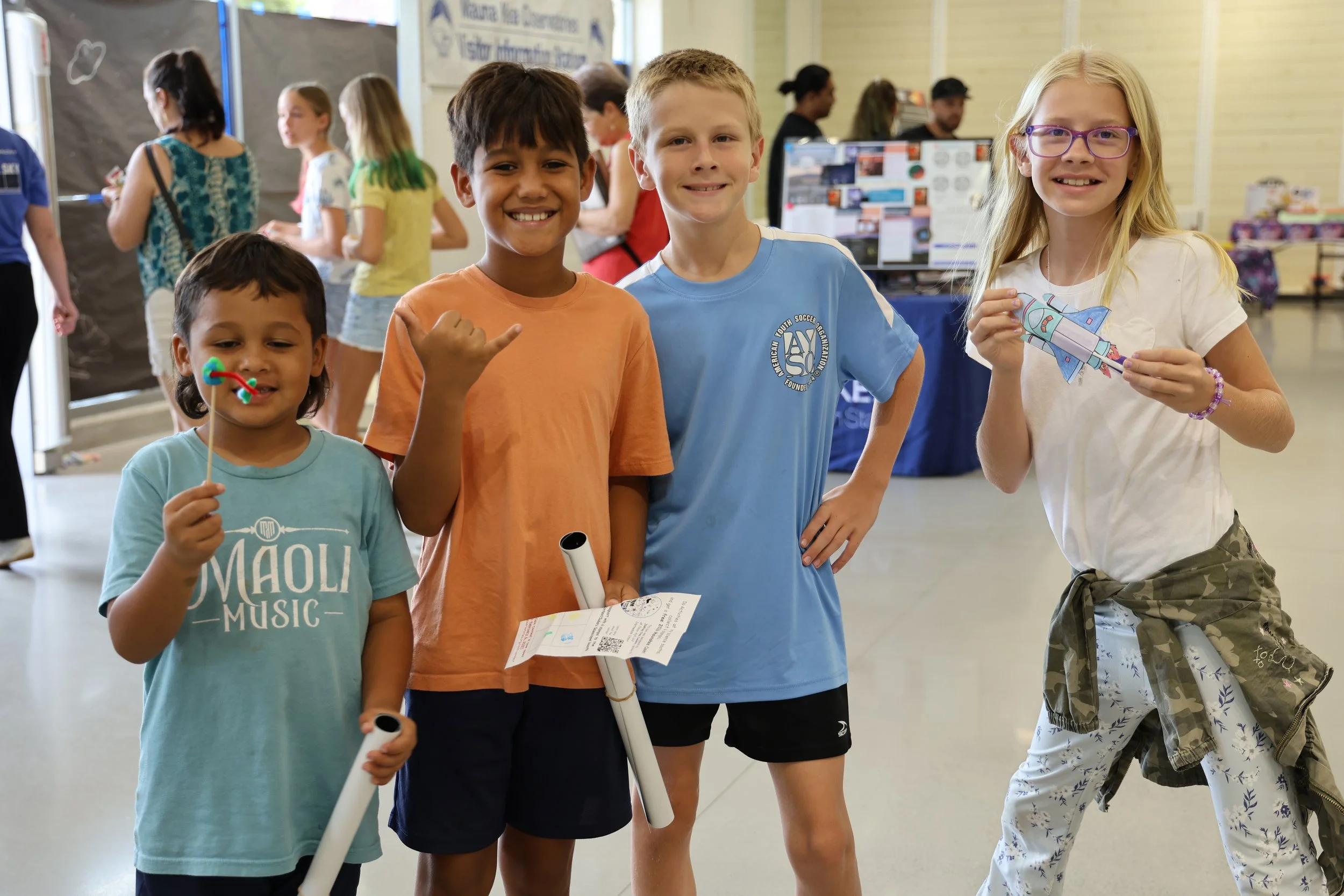
Nearly 300 community members gathered at Kona Commons on Saturday, November 7, to explore the wonders of science at the ninth annual AstroDay West. The free event brought together nearly 20 organizations for a day of hands-on activities, live demonstrations, and opportunities to connect with scientists and educators from across Hawaiʻi Island.
Families explored exhibits spanning astronomy, engineering, and the natural world, discovering how research here at home helps us better understand our island and the universe beyond it.
“Over the years, AstroDay has evolved into a celebration of science and technology across Hawaiʻi Island,” said Doug Simons, director of the University of Hawaiʻi Institute for Astronomy, which organizes the event. “This year, keiki and their ʻohana explored everything from the depths of the ocean to the far reaches of the universe. I hope the experience inspires them to become the next generation of scientists, engineers, and explorers.”
One of the day’s highlights was Hale Hōkū, Gemini Observatory’s portable planetarium, which gave visitors an immersive look at the night sky. Outside, solar telescopes offered a chance to safely observe the sun, connecting families with an astronomical experience, even in the middle of the day.
For Raimie Hawk, a constellation-making activity offered a memorable way for her son to bring that sense of discovery home.
“The activity that we really enjoyed today was making my son's very own constellation,” said Raimie. “He drew out a little character and put on glow-in-the-dark stars, and I know he'll definitely put it up in his room, and it'll be something he'll remember from this event.”
Raimie also won a blanket for her son after spotting it at the check-in table and entering the raffle on a whim. She said she was “in complete shock” when her name was called and was especially happy to bring it home for him. Together, the blanket and his handmade constellation will remind him of what he discovered at AstroDay and may inspire him to imagine a future working in science.
Throughout the day, visitors could enter drawings for a Celestron telescope and other prizes. Keiki also had the opportunity to enter the annual Maunakea Coin Contest, which invites Hawaiʻi Island students in grades K–12 to create artwork for a chance to have their designs featured on official AstroDay collector coins.
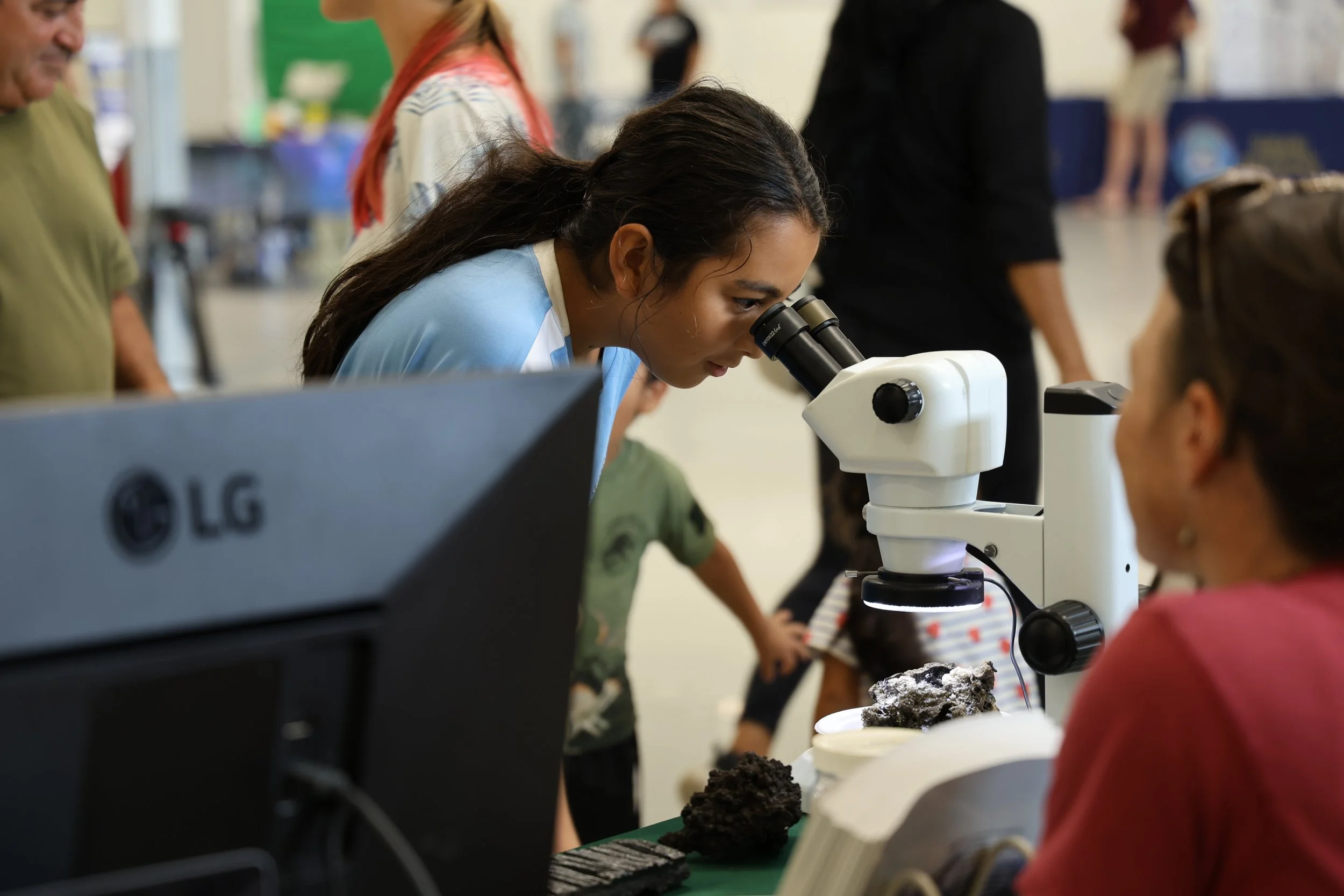
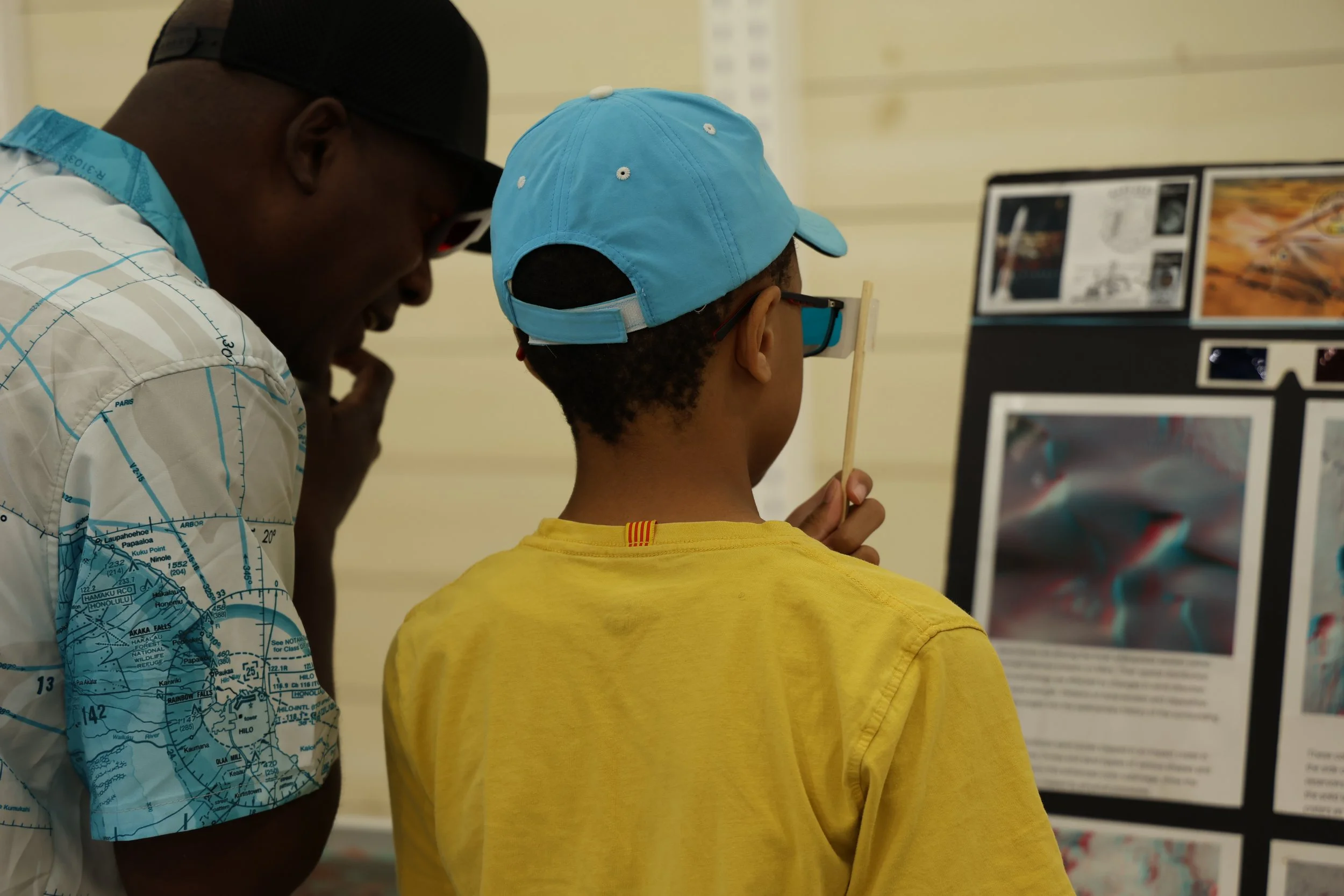
Beyond these highlights, participating organizations offered more opportunities for discovery. Alongside Maunakea Observatories, visitors connected with NASA Solar System Ambassadors, Onizuka Space Science Program, and University of Hawaiʻi's Space Science and Engineering Initiative (SSEI), which helped families explore space science and engineering.
Families explored the island’s land, sea, and atmosphere by connecting with the National Weather Service (NOAA) Mauna Loa, Hawaiian Volcano Education & Resilience Institute (HVERI), USGS Hawaiian Volcano Observatory, Waikōloa Dry Forest Initiative, and Ke Kai Ola, operated by The Marine Mammal Center. These organizations introduced visitors to scientific work spanning marine life, native forests, weather, and volcanoes.
Community learning partners rounded out the day’s experiences. Hawaiʻi Community College’s Pālamanui Natural Science Department, Thelma Parker Memorial Public and School Library, and the Hawaiʻi Keiki Museum offered hands-on learning opportunities while connecting families with educational resources in their community.
These encounters are at the heart of AstroDay: giving families space to ask questions, explore new interests, and discover science together. A conversation with an astronomer or a constellation made with glow-in-the-dark stars can become the starting point for a child’s next question and their next discovery.
"AstroDay is really a celebration of all of the science that's done on Hawaiʻi Island. The event truly spanned mauka to makai, from the Maunakea Observatories down to Ke Kai Ola, the Marine Mammal Center,” said Mary Beth Laychak, Maunakea Observatories internship coordinator. “Our goal is to inspire our keiki to keep the joy of science and learning as they grow older, knowing they can work for these organizations in future, right here on Hawaiʻi Island.”
Maunakea Observatories runs AstroDay events twice yearly on the Big Island, one in Kona and one in Hilo. Stay tuned for the next AstroDay event in 2027!
