
Community Astronomy and Mutual Stewardship at the AAS Winter Meeting
In January, Maunakea Observatories, NSF NOIRLab, and the Hawaiʻi I Ke Alo Mutual Stewardship Project, in partnership with the American Astronomical Society (AAS), convened a three-day, in-person summit focused on implementing community models of astronomy and mutual stewardship, with a specific focus on strategies and practices that strengthen alignment between our communities and the astronomy institutions that have a presence on our lands and amongst our people.
This Community Astronomy and Mutual Stewardship Summit was led by Hawaiʻi- and Arizona-based facilitators, namely Norma Wong, Zen teacher and Indigenous Hawaiian leader of Hawaiʻi I Ke Alo, along with others who have worked at the intersection of community and astronomy on Maunakea. The summit provided opportunities for participants to gain a deeper understanding of the nuances of these concepts and work towards building a web of practice where community models of astronomy can be developed nationwide.
2023 and 2026 Summits
Conversations about community astronomy and mutual stewardship have been evolving and adaptive. They first expanded outside of Hawaiʻi with the inaugural Mutual Stewardship Summit, held in Seattle, Washington, in 2023, directly preceding the AAS winter meeting. The facilitators first asked, “What might we do to bring this conversation about mutual stewardship up to a national and international context for people in astronomy?" explained Christine Matsuda, one of the facilitators who works on transformation strategy with MKO. This first Summit brought together people “with a foot in both worlds," she said, from indigenous astronomers to non-indigenous astronomers who had been working on healing the too often dysfunctional relationships between astronomy and communities. The second Summit, held just before the AAS’s 247th winter meeting in Phoenix, Arizona, continued these learnings and relationship-building.
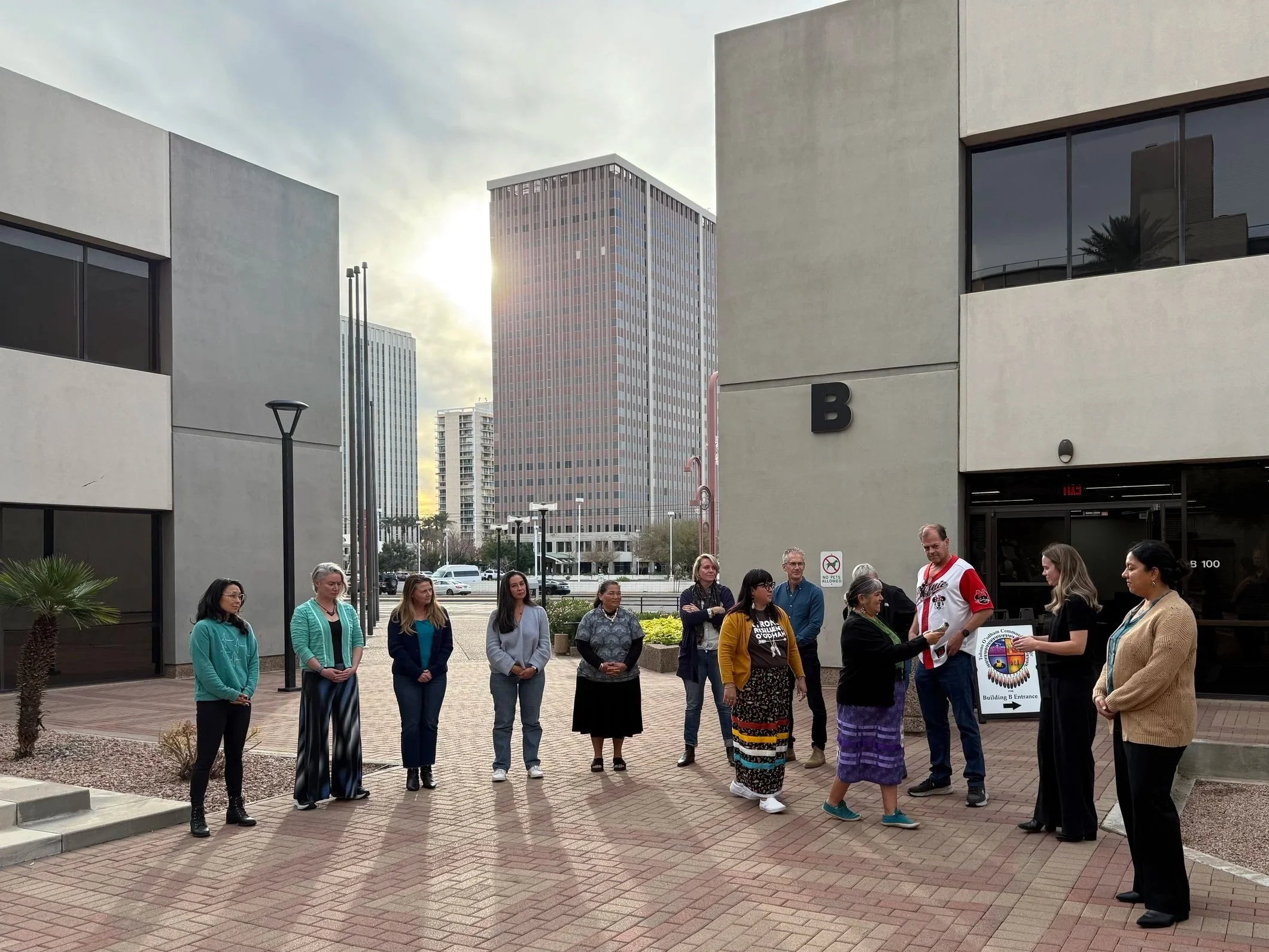
This year’s summit was convened at the invitation of Jacelle Ramon-Sauberan and hosted by the Tohono O’odham Nation, one of the stewards of I’oligam Du’ag, part of the tribe's reservation and ancestral land that hosts Kitt Peak National Observatory. Jacelle, a NOIRLab employee, educator, and cultural practitioner, created space for the summit at Tohono O’odham Community College through two important cultural practices for the O’odham community — song and story. Jacelle invited one of her students to open and ground the summit participants in space with song, and then she closed the summit with story.
Mutual Stewardship
In the vision of the Hawaiʻi I Ke Alo Mutual Stewardship project, which was created to advance community-centered governance rooted here on Maunakea, mutual stewardship is when “humans follow the earth.” This means beginning with and centering the needs and desires of the place, the land, the waters, and the non-human beings who call that place home. It centers the integral wisdom of those who have long and ongoing relationships of care with the place and works within a multi-generational arc: where our goals, responsibilities, and dreams are grounded in the past and stretch many generations into the future.
Community Model of Astronomy
What is a community model of astronomy? Christine’s working definition means practicing astronomy in such a way that the communities that host our institutions are centered in the decisions we make. “These decisions fall into two areas: one, how we show up in our communities, and two, how we bring multiple systems of knowledge from our communities into our science practices," she continued.
Importantly, “community” doesn’t only mean the people. From indigenous perspectives, and in fact the viewpoint of many local communities and cultures, there is no separation between people and the natural world. So in our conversations around community astronomy and mutual stewardship, Christine explained, we need to start from an understanding that community means both place and people.
For MKOs, showing up in our community means opening the doors of our facilities to community use, like Kaukau 4 Keiki food distribution at W.M. Keck Observatory; bringing astronomy and science to our keiki and ʻohanas in purposeful and engaging events, like Astronaut Ellison Onizuka Day and Journey Through the Universe; and uplifting local youth in Hawaiʻi to pursue career opportunities in astronomy through programs like Maunakea Scholars and Akamai summer internships. Events and programs like these bring astronomy into our communities and bring our communities into astronomy.
The Learning Continues
Since the 2023 summit, the organizers have been doing regular engagements at other AAS meetings. One great advantage of working hand-in-hand with AAS is that their meetings bring all the American astronomers together twice a year, which helps to keep the conversation and momentum moving. These astronomers then disperse to their various institutions and facilities across the country, bringing what they learned about community-centered astronomy models back home to their teams.
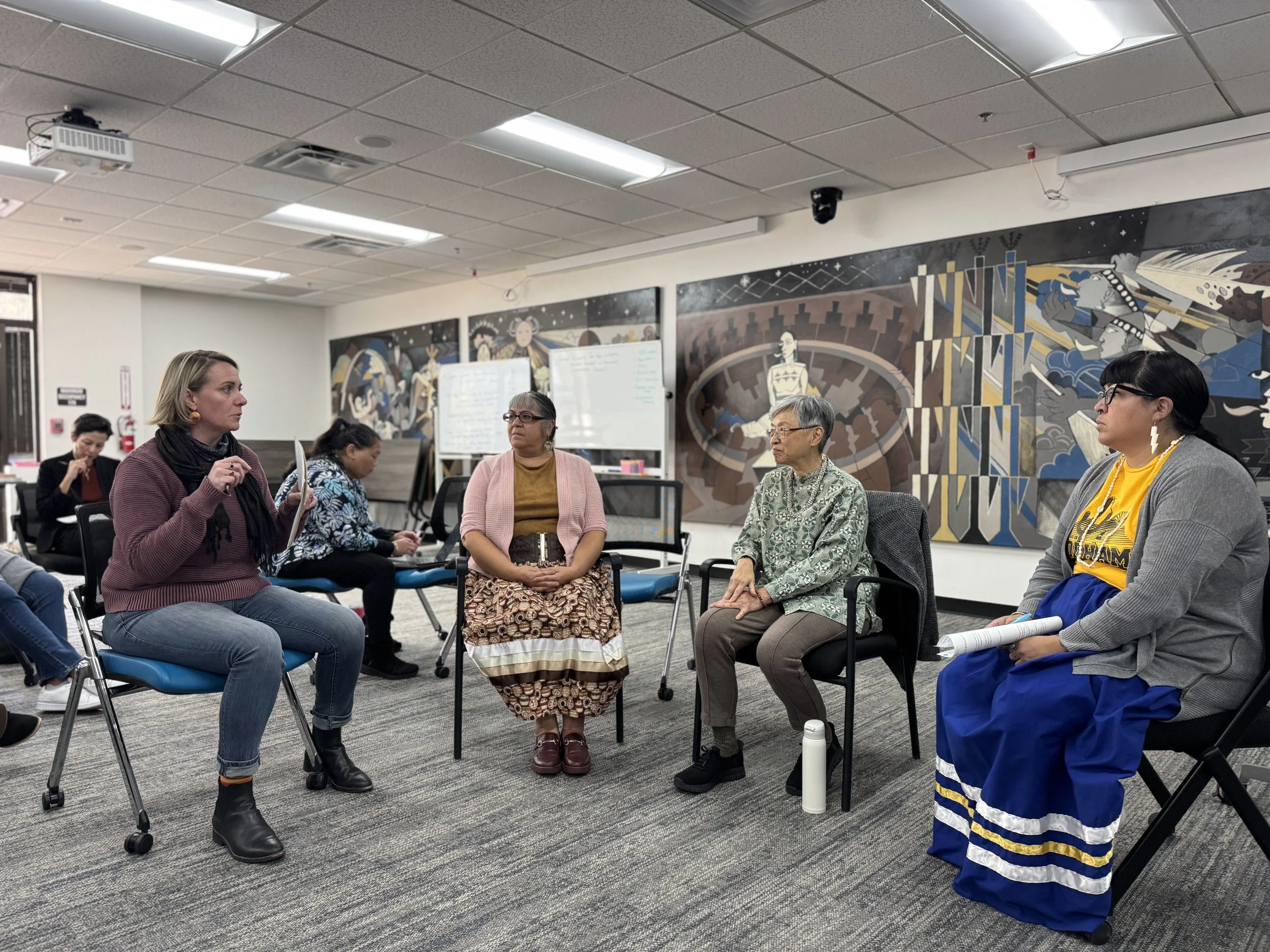
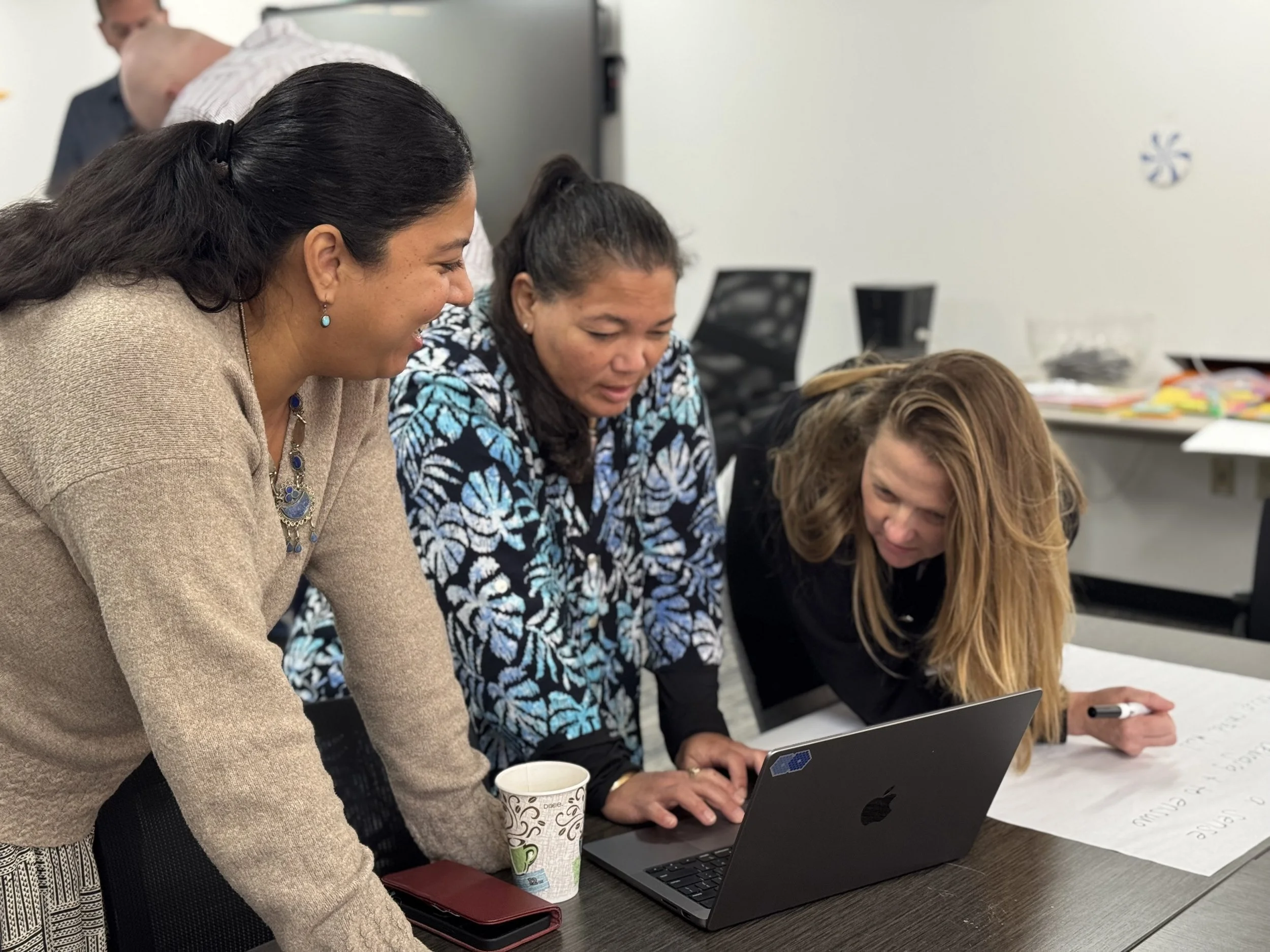
This year, the organizers also ran an official workshop during the AAS conference itself, which broadened the audience to a much wider range of astronomers interested in engaging in community-centered astronomy. Participants of the AAS workshop split into breakout groups and discussed the purpose statements that were developed by summit participants in small groups.
Now, after the summit and workshop, the facilitation team continues to offer support and hosts virtual gatherings for purpose teams to develop plans for how they’ll advance their learnings at their home institutions. The facilitators are also planning another larger engagement around the next AAS winter meeting in Salt Lake City, Utah.
Recognizing the importance of bringing these conversations to the rest of the incredible astronomy staff here in Hawaiʻi, the facilitators are also doing guiding principles and implementation work here at home. “We’re hosting staff talk story sessions, where the intent is to bring the national astronomy community back to our own people,” said Christine. “We make sure we’re facilitating and holding space with our own people here in Hawaiʻi who may not have the opportunity to travel to those conferences.” After all, it’s our people here who first brought these essential concepts to the forefront of our conversation about Maunakea stewardship. The facilitation team hopes to continue to interweave the learnings from these summits into the everyday fabric of community and astronomy in Hawaiʻi and bring more learnings — and more new questions — to the next AAS summit and beyond.
Purpose Statements, Generated by Summit Participants
For mutual stewardship to be adopted by global astronomy as best practice and a systems requirement for all its observatories, including a collective responsibility to contribute positively to its local communities.
To better understand our shared history and common purpose for Lick Observatory and local indigenous communities. We will build and sustain an engaged, mutually beneficial partnership that ensures community access and decision-making in site usage and development for educational, cultural, and scientific activities as a model for historic observatories across the Americas.
To ensure science continues to serve an increasingly complex world. Evolve the practice of science through closely integrated multi-knowledge teams and approaches.
In order to foster a sense of place and belonging and ensure a deep-rooted kuleana for the stewardship of Maunakea, all people in Hawaiʻi will have a holistic education inclusive of all the sciences and cultural perspectives of Maunakea.
Hihim — To ensure continuous, mutual dialogue that fosters trust and mutual stewardship between I’iloqam Du’aq and O’odham communities.
To build and maintain long-term trust to have multi-generational succession from our local host communities embedded into all levels of leadership that ensures the value of mutual stewardship becomes a visible and recognizable part of the shared culture across observatories.
To transform how science, discovery, and astronomy are practiced in Hawaiʻi into a shared, community-rooted responsibility to people and place, recognizing that it shapes belonging, values, and care, and carrying that kuleana forward through a commitment to being a good ancestor and building pathways so the next seven generations are prepared to steward place, knowledge, and community.
